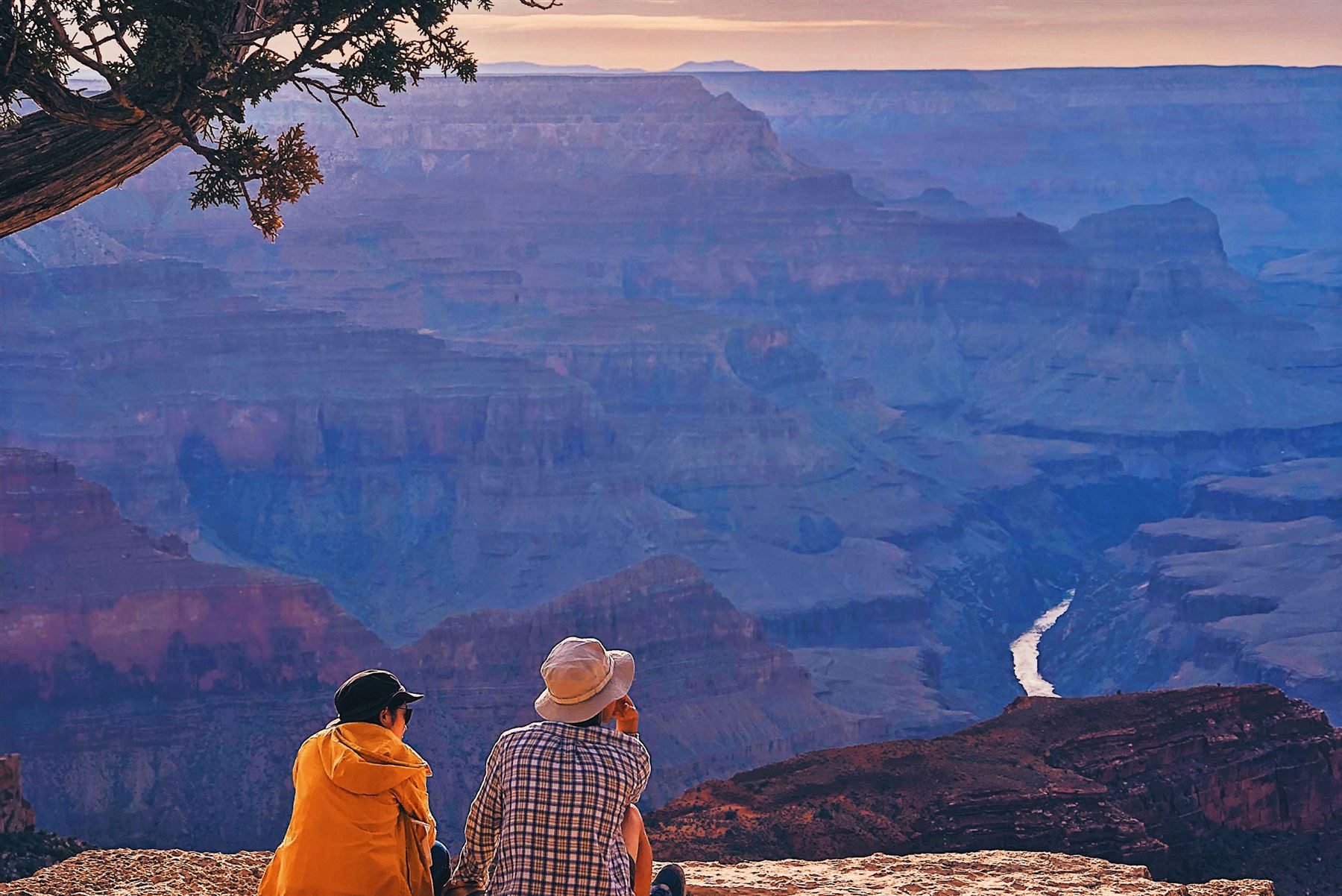
Straightforward answers to the questions we hear most from travelers planning their first Arizona trip — weather, getting around, national parks, safety, and budget.
Arizona draws first-time visitors and repeat travelers alike, and most of them arrive with a similar list of questions: how long to stay, whether they need a car, when to go, and what a trip will realistically cost. This page collects the questions we hear most often from guests planning a visit, organized by topic so you can jump straight to what matters for your trip.
Some of these answers point to a more detailed guide elsewhere on this site — that's intentional. This page is meant to give you a fast, honest answer to each question, then hand you off to deeper reading only where it's genuinely useful, rather than repeating the same content in multiple places.
Can't find your answer?
Our local team is happy to help. If your question isn't covered here, give us a call and we'll be glad to point you in the right direction — real, experienced people are always behind the phone, not just this page.
The most common questions travelers ask before they've even booked their trip — the short version of answers covered in more depth throughout the rest of this page.
How many days do I need?
A week covers the Grand Canyon, Sedona, and one desert city comfortably; ten days to two weeks allows for a more relaxed pace.
Do I need a car?
In almost every case, yes — Arizona's destinations are spread far apart with limited public transit between them.
What's the best time to go?
March, April, October, and November are consistently strong statewide, though the ideal month depends on your destinations.
Is Arizona expensive?
It can suit almost any budget — costs vary far more by travel style and season than by destination.
Is it safe?
Yes, when visitors prepare for heat, weather, and terrain, which are far bigger factors here than typical travel risks.
Can I see the Grand Canyon and Sedona together?
Yes — the two are about two hours apart by road and pair naturally in a single itinerary.
Is cell service reliable?
Good in cities and towns, but unreliable or absent in canyons, on tribal lands, and along remote highways.
Should I book a private tour?
Many travelers find it saves real time and stress, particularly for the Grand Canyon and Sedona — worth weighing against a rental car.
Planning Your Trip
The questions most travelers ask before they've booked anything, covering timing, duration, and general itinerary shape.
How many days do I need to see Arizona?
A week gives you a solid introduction to the Grand Canyon, Sedona, and one desert city, while ten days to two weeks allows for a more relaxed pace with time for hiking and side trips. Shorter trips work well if you focus on one or two regions instead of trying to cover the whole state.
What's a good first-time Arizona itinerary?
Many first-time visitors base themselves in Sedona or Flagstaff, day-trip to the Grand Canyon, and add Phoenix or Scottsdale at the start or end of the trip. Our Grand Canyon Travel Planner and Arizona Guides hub both offer starting frameworks worth adapting to your own priorities.
Should I plan everything myself or book a guided tour?
Both work well, and many travelers do a mix — self-driving for flexibility on some days, and a private guided tour for the days where navigation, parking, and local knowledge matter most, like a Grand Canyon or Sedona visit.
When should I book lodging and tours?
As early as possible for peak season — spring and fall in particular. Popular lodging near the Grand Canyon and in Sedona can sell out weeks or months ahead, and guided tours often have limited daily availability.
Can I visit Arizona as a day trip from Las Vegas?
The Grand Canyon's West Rim is a popular day trip from Las Vegas, though it's a different, separately operated area from the South Rim most of this site covers. The South Rim is a considerably longer drive from Las Vegas and better suited to an overnight stay.
What if my group has very different interests or fitness levels?
Arizona handles mixed-interest groups well, since most major viewpoints are reachable without strenuous hiking even as more ambitious trails branch off nearby. A private guided tour is particularly useful here, since a good guide can adjust the day's pace and stops to suit everyone rather than forcing a single fixed itinerary on the whole group.
Getting There & Getting Around
Arizona's size surprises many first-time visitors — these questions cover the logistics of actually moving between destinations.
What is the best airport to fly into?
Phoenix Sky Harbor is the largest and most connected option, while Flagstaff offers a much shorter drive to the Grand Canyon and Sedona for travelers whose trip is centered on northern Arizona. Our Arizona Airports Guide compares every realistic option in detail.
Do I need a car in Arizona?
In almost every case, yes. Arizona's major destinations are spread far apart with limited public transit between them, so a rental car or a private guided tour are the two realistic ways to get around. See our Arizona Driving Guide for road conditions and seasonal driving tips.
How far is the Grand Canyon from Phoenix?
Roughly three and a half to four hours by road from Phoenix to the South Rim, depending on your exact route and stops. Our Arizona Maps guide covers driving distances between all of the state's major destinations.
Can I see the Grand Canyon and Sedona in one trip?
Yes, and it's one of the most popular combinations in the state. The two are roughly two hours apart by road, making them easy to pair within a single week-long itinerary, often with Flagstaff or Williams as a convenient stop in between.
Is public transportation available between cities?
Limited. The Grand Canyon Railway connects Williams to the South Rim, and some shuttle services exist between specific points, but there's no comprehensive public transit network connecting Arizona's major destinations the way trains or buses might in other regions.
Are rideshare services available?
Yes, in Phoenix, Scottsdale, and other larger towns, though availability thins out considerably in smaller gateway towns and becomes essentially nonexistent near the Grand Canyon itself. Rideshare works well for getting around within a city but isn't a practical way to travel between Arizona's major destinations.
Weather & Best Time to Visit
Arizona's weather varies dramatically by elevation, which shapes almost every timing decision for a trip.
What is the best time to visit Arizona?
March, April, October, and November are consistently strong choices statewide, though the single best month depends on which destinations and activities matter most to you. Our full Best Time to Visit Arizona guide breaks this down by region and month.
How hot does it get?
The lower desert, including Phoenix and Tucson, regularly exceeds 100°F in summer, while higher-elevation destinations like Flagstaff and the Grand Canyon's South Rim stay considerably cooler. Our Arizona Weather Guide covers monthly temperatures by region in detail.
Does it snow in Arizona?
Yes, particularly in northern Arizona. Flagstaff and the Grand Canyon's South Rim regularly see winter snow, while Sedona gets occasional light snow and Phoenix essentially never does.
When is monsoon season?
Roughly July through September, bringing dramatic afternoon thunderstorms, lightning, and flash-flood risk across much of the state, particularly in canyons and washes. Mornings tend to stay clear even during monsoon season.
When should I avoid visiting Arizona?
Nothing rules out a visit entirely, but July and August bring intense lower-desert heat and monsoon storms that make that specific combination — Phoenix in high summer — a difficult choice for extended outdoor time.
Grand Canyon Basics
The Grand Canyon draws its own extensive set of questions — this section covers the essentials, with a full dedicated FAQ for anyone who wants more depth.
Is the South Rim or North Rim better?
The South Rim is open year-round, far more developed, and easier to reach, making it the right choice for the vast majority of visitors. The North Rim is quieter and closes seasonally, appealing mainly to travelers who've already seen the South Rim or specifically want its more remote character.
Can I visit the Grand Canyon in one day?
Yes — many visitors comfortably see the South Rim's highlights in a single day, particularly with a well-planned itinerary or a private guided tour handling the logistics.
How much does it cost to enter the Grand Canyon?
There's a standard per-vehicle entrance fee valid for seven days, with several free or discounted pass options depending on age, disability status, or military service. Our National Park Passes guide covers every option in detail.
What else should I know before visiting?
Our dedicated Grand Canyon FAQ covers dozens of additional questions specific to the park — weather, hiking, wildlife, photography, accessibility, and more — in far greater depth than this statewide overview.
Sedona & Red Rock Country
Sedona is one of Arizona's most popular stops, and it comes with its own set of common questions.
How many days should I spend in Sedona?
One full day covers the main viewpoints and a short hike; two to three days allow for a more relaxed pace with time for multiple trails, shopping, and a Jeep tour. Our full Sedona Guide covers itinerary options in depth.
Is Sedona hiking difficult?
It varies widely by trail — some are short, flat, and accessible to most fitness levels, while others involve steep, exposed terrain. Checking a specific trail's difficulty before setting out matters more in Sedona than the town's postcard reputation might suggest.
Do I need a Red Rock Pass to park in Sedona?
Yes, for many trailheads on National Forest land surrounding Sedona. A day pass or annual pass can be purchased locally, and some national park passes also cover this fee — worth confirming before you park.
Is Sedona expensive?
Sedona skews toward the higher end for lodging and dining compared to some other Arizona destinations, but budget-friendly options exist too, especially with advance planning and off-peak timing. Our Budgeting Your Arizona Trip guide covers this in more detail.
Phoenix, Scottsdale & the Desert Cities
Arizona's low-desert cities offer a very different experience from the Grand Canyon and Sedona, with their own common questions.
Is Phoenix worth visiting, or just a gateway city?
Phoenix and neighboring Scottsdale are genuine destinations in their own right, with resorts, golf, museums, and dining that draw visitors independent of any Grand Canyon trip. Our Phoenix Guide and Scottsdale Guide cover both in depth.
How hot is Phoenix, really?
Genuinely hot — summer daytime highs regularly exceed 100°F and often reach past 110°F in July and August. Winter is a different story entirely, with mild, sunny days that make it one of the most popular seasons to visit.
Is it walkable, or do I need a car?
Both Phoenix and Scottsdale are spread out and generally require a car or rideshare to get around efficiently, though specific districts like Old Town Scottsdale are walkable once you've arrived.
National Parks & Passes
Arizona is home to multiple national parks and monuments beyond the Grand Canyon, each with its own entrance requirements.
Are Arizona's national parks worth the entrance fee?
Yes, and an America the Beautiful Annual Pass can be worthwhile if your itinerary includes more than two federal entrance fees, covering national parks and monuments across the state and beyond. Our National Park Passes guide compares every pass option.
Does one park pass cover multiple parks?
The Annual Pass and several other options cover entrance fees at any federal recreation site nationwide, not just one park, making them genuinely useful for a multi-stop Arizona itinerary.
Do Monument Valley and Antelope Canyon require a park pass?
No — both sit on Navajo Nation land and are operated independently with their own separate admission and tour fees, not covered by any National Park Service pass. Our Monument Valley Guide and Antelope Canyon Guide cover specifics.
Money, Costs & Budgeting
Practical financial questions that come up regardless of travel style.
Is Arizona expensive to visit?
It can suit almost any budget. Costs vary far more by travel style, season, and choice of lodging than by destination, so both budget-conscious and luxury travelers can plan a satisfying trip. Our Budgeting Your Arizona Trip guide breaks this down by category.
Do I need cash, or is card payment common?
Card payment is widely accepted throughout Arizona, including at most small shops and restaurants. Carrying a small amount of cash is still useful for tips, parking, and a handful of rural stops that may not accept cards.
Is tipping expected in Arizona?
Yes, tipping follows standard U.S. norms — typically around 15–20% at restaurants, and a similar range for tour guides and drivers, though guided-tour gratuities are always at your discretion.
Are Grand Canyon tours worth the cost?
For many travelers, yes — a private tour bundles transportation, local knowledge, and logistics into one predictable cost, which can offset the time and stress of self-driving and navigating on your own.
Safety & Health
Arizona's biggest safety considerations relate to environment and terrain rather than typical travel-safety concerns.
Is Arizona safe for tourists?
Yes, when visitors prepare for heat, weather, and terrain. Most safety concerns in Arizona come down to sun exposure and hydration rather than crime or other typical travel risks. Our Desert Safety Guide covers this in full detail.
What's the biggest safety risk for visitors?
Heat-related illness, particularly for hikers who underestimate the return trip on a lower-elevation trail. Carrying more water than feels necessary and starting early in the day address most of the risk.
What should I do in a real emergency?
Call 911, which works throughout Arizona including inside national parks. Our Arizona Emergency Information guide covers what to have ready before you travel and how to handle situations where cell service is unavailable.
Are there dangerous animals in Arizona?
Rattlesnakes, scorpions, and the occasional mountain lion are present, but serious encounters are rare when visitors keep their distance and stay alert on trails. Most wildlife issues resolve themselves when animals are simply left alone.
Practical Travel Questions
A collection of smaller but genuinely useful questions that don't fit neatly elsewhere.
Is cell phone service reliable across Arizona?
No. Coverage is generally good in cities and towns but becomes unreliable or nonexistent in canyons, on tribal lands, and across remote stretches of highway. Downloading offline maps before you lose signal is a simple, worthwhile habit.
Can I bring my dog to Arizona's national parks?
Leashed pets are allowed in many developed areas but not on most trails below the rim or on shuttle buses. Rules vary by park and monument, so it's worth checking specifics before you arrive with a pet in tow.
Is Arizona a good destination for seniors?
Yes — many of the state's best-known viewpoints, historic lodges, and attractions are reachable without strenuous hiking. Our Grand Canyon for Seniors and Arizona Accessibility Guide both cover this in depth.
What should international visitors know before arriving?
Expect sales tax added at checkout rather than included in listed prices, standard U.S. tipping norms, fuel priced per gallon, and a possible need for an International Driving Permit to rent a car — all worth confirming before your trip.
What's the one thing most first-time visitors get wrong?
Underestimating driving distances and elevation changes. Arizona looks compact on a map, but a day that includes Phoenix, Sedona, and the Grand Canyon involves serious driving time and a real shift in climate — planning a realistic pace matters more here than in many destinations.
Let a Local Guide Answer the Rest
Some questions are easier to answer over the phone than on a page, and some are best answered in person, by a guide who knows the roads, the season, and the day's conditions firsthand. Grand Canyon Journeys offers fully private tours from Sedona, Flagstaff, and Williams — no rental car, no navigation, no guesswork required.