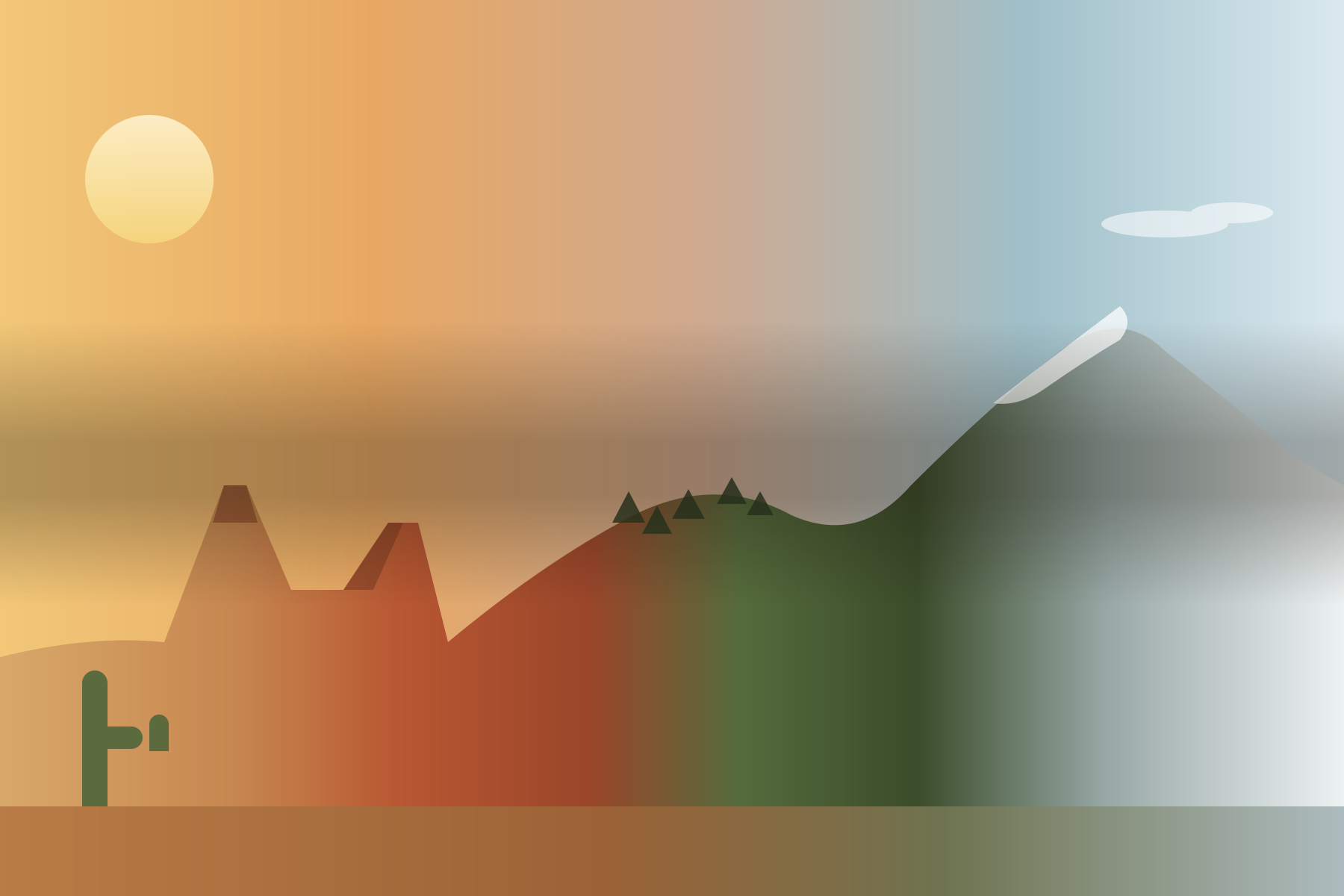
Understanding Arizona's Surprisingly Diverse Weather
Arizona is commonly pictured as year-round desert heat, but that description only covers part of the state. Arizona holds low-elevation Sonoran Desert, high desert, forested mountain country, the Colorado Plateau, deep canyons, and genuinely snowy alpine areas, often within a few hours' drive of each other.
A traveler can leave 105°F heat in Phoenix in the morning and encounter conditions 30 degrees cooler in Sedona, Flagstaff, Williams, or the Grand Canyon by afternoon. Because of this, it's worth checking the forecast for your specific destination rather than relying on a general statewide forecast, which can be misleading for anywhere north of Phoenix.
Travelers joining a private tour should still bring layers, sun protection, water, and weather-appropriate clothing regardless of season. Conditions at the Grand Canyon can be very different from conditions at a Sedona, Flagstaff, or Williams pickup location the same morning.
Arizona's Main Climate Regions
The Lower Desert
Phoenix, Scottsdale, Mesa, Tempe, Yuma, and Lake Havasu City sit in Arizona's lowest, hottest region. Summers are very hot, winters are mild, annual rainfall is limited, and spring and fall bring genuinely pleasant conditions. Midsummer nighttime temperatures often stay uncomfortably warm even after sunset.
The High Desert
Sedona, Cottonwood, Camp Verde, Prescott, and Payson sit at higher elevation and run noticeably cooler than Phoenix, with more distinct seasonal changes. Winter nights turn cold, occasional snow is possible, and summers are warm but generally more manageable than the lower desert.
Northern Arizona's Mountain Climate
Flagstaff, Williams, the Grand Canyon's South Rim, and the White Mountains see cold winters, regular snowfall, cool summer nights, and mild daytime summer temperatures, along with weather that can change rapidly. Flagstaff sits at roughly 7,000 feet, which is why it's considerably cooler than Phoenix and can see significant winter weather even when the desert below stays warm and dry.
Southern Arizona
Tucson, Bisbee, Sierra Vista, and Tombstone see hot desert summers and mild winters, with a strong monsoon influence and cooler conditions at higher elevations in the surrounding mountains.
Arizona Weather by Season
Spring (March–May)
One of the most popular travel periods statewide. Phoenix and southern Arizona enjoy pleasant temperatures, Sedona sees mild days, and cold mornings, along with possible late snow, remain common in northern Arizona early in the season. Temperatures climb through May, and windy conditions can occur. Spring favors hiking, sightseeing, Grand Canyon tours, desert wildflowers, scenic drives, and outdoor dining. Pack light layers, a jacket for mornings and evenings, sunscreen, a hat, comfortable walking shoes, and a refillable water bottle.
Summer (June–August)
The gap between lower and higher elevations is at its widest in summer. Phoenix and the lower desert see extreme daytime heat, very warm nights, intense sun, and dangerously hot vehicle and pavement surfaces — strenuous outdoor activity should be limited during peak afternoon hours. Sedona runs hot but cooler than Phoenix, with strong sun, afternoon monsoon storms, and cooler mornings and evenings. Flagstaff and Williams stay comfortable during the day with cool evenings, though afternoon thunderstorms bring sudden temperature drops. The Grand Canyon's South Rim sees warm days, cool nights, strong ultraviolet exposure, and afternoon thunderstorm potential, with conditions varying noticeably along the rim. Phoenix-area summer heat can become genuinely dangerous, so hydration, shade, early starts, and realistic outdoor plans matter more than at any other time of year.
Fall (September–November)
September can remain hot in the desert as monsoon activity tapers off, while October often brings excellent sightseeing weather statewide. Northern Arizona nights turn cold earlier in the season, fall colors appear around Flagstaff, Oak Creek Canyon, and the White Mountains, and snow becomes possible again at higher elevations later in fall. Recommended activities include Grand Canyon sightseeing, Sedona hiking, scenic drives, Route 66 travel, outdoor photography, and Arizona wine country. Pack layered clothing, a light jacket, a warmer coat for late fall in northern Arizona, sun protection, and a rain shell for early fall.
Winter (December–February)
Winter conditions vary dramatically by region. Phoenix and Scottsdale see generally mild daytime weather, cool evenings, occasional rain, and remain a popular winter travel season. Sedona sees cool days, cold nights, occasional snow that often melts quickly at lower elevations, and icy shaded areas that can linger. Flagstaff and Williams see frequent freezing temperatures, regular snowstorms, snow-covered roads, possible travel delays, and real winter recreation opportunities. The Grand Canyon's South Rim sees snow and ice, cold temperatures, reduced services in some areas, beautiful winter views, and possible road and trail hazards. The National Weather Service specifically advises travelers to prepare for snow, elevation changes, snow squalls, and rapidly changing road conditions in northern Arizona during winter.
Arizona Weather by Month
Rather than a chart of precise averages, here's a practical overview of what to generally expect each month.
| Month | What to Expect |
|---|
| January | Mild lower-desert days; cold northern Arizona conditions; snow possible around Flagstaff, Williams, and the Grand Canyon. |
| February | Gradual desert warming; continued winter weather at higher elevations; a good season for Phoenix and Tucson sightseeing. |
| March | Popular spring travel month; comfortable desert temperatures; unpredictable mountain weather with possible late snow. |
| April | Excellent statewide sightseeing conditions; warmer desert weather; cool evenings at elevation; increasing hiking activity. |
| May | Hotter in Phoenix and southern Arizona; pleasant in northern Arizona; usually dry with strong sunshine. |
| June | Very hot in the lower desert; usually dry early in the month; pleasant mornings in northern Arizona; official monsoon season begins June 15. |
| July | Extreme desert heat; increasing humidity; afternoon thunderstorms; flash-flood and lightning risks. |
| August | Continued heat; monsoon storms; humid periods; sudden heavy rainfall possible. |
| September | Hot in lower elevations; gradually cooler in northern Arizona; monsoon activity may continue; good late-month travel conditions. |
| October | Excellent weather across much of the state; cool northern Arizona nights; fall colors at higher elevations. |
| November | Mild desert days; cold northern Arizona nights; possibility of early winter storms. |
| December | Popular season in Phoenix and Scottsdale; winter conditions in Flagstaff and Williams; snow possible at the Grand Canyon. |
Arizona Monsoon Season
Arizona's official monsoon season runs from June 15 through September 30, although the timing and strength of storms vary by year and region — northern Arizona often doesn't receive sustained monsoon moisture until around early July. Monsoon conditions bring afternoon thunderstorms, lightning, heavy rain, flash flooding, strong wind, falling branches, dust storms, reduced visibility, and rapid temperature changes.
It's worth understanding one important distinction: the Arizona monsoon is a seasonal shift in wind and moisture patterns, not a single storm. Storms tend to build through the afternoon and can arrive with little warning even under a clear morning sky.
Flash Flood Safety in Arizona
Flash flooding can occur even when it isn't raining directly above you, since water from a storm miles away can travel quickly down a wash or canyon. High-risk areas include slot canyons, dry washes, low-water crossings, narrow canyons, desert roads, and creek crossings.
Never drive through a flooded road. Do not park or camp in a dry wash. Leave narrow canyons when thunderstorms threaten, even distant ones. Check local warnings before entering Antelope Canyon or remote hiking areas, and never assume a distant storm can't affect your location. The National Weather Service advises against camping or parking near streams and washes during monsoon conditions, since flash floods may occur well after dark or far from the heaviest rainfall.
Dust Storms and Reduced Visibility
Dust storms mostly affect central and southern Arizona, and they can develop suddenly, dropping visibility rapidly and making vehicle control difficult in high winds. Interstate travel can become genuinely hazardous, and dust often precedes or accompanies a thunderstorm.
If you're driving when one develops: slow down carefully, avoid stopping in an active traffic lane, follow official transportation and weather instructions, never attempt to outrun a large dust wall, and delay travel entirely when warnings are active.
Snow and Winter Driving in Northern Arizona
Winter driving matters most around Flagstaff, Williams, the Grand Canyon's South Rim, Interstate 40, Interstate 17 near Flagstaff, Highway 64, Oak Creek Canyon, and the northern portions of Route 66. Conditions to watch for include black ice, snow-covered roads, chain or traction recommendations, road closures, reduced visibility, snow squalls, steep grades, and freezing overnight temperatures.
Before any winter drive, check the Arizona Department of Transportation's AZ511 road conditions, National Weather Service Flagstaff alerts, and National Park Service road status pages. Our full Arizona Driving Guide covers mountain driving, speed limits, and seasonal road conditions in much greater detail.
Weather at the Grand Canyon
"Grand Canyon weather" isn't a single condition — it varies enormously by location within the park. The South Rim, at high elevation, runs cooler than Phoenix and Sedona, sees snow during winter, pleasant summer mornings, and afternoon summer thunderstorms. The Inner Canyon is much hotter than the rim, with limited shade and serious heat exposure — elevation-related temperature differences between rim and river can exceed 20-25°F. The North Rim, at even higher elevation, runs cooler still, sees heavy winter snow, and closes seasonally for the winter months.
It's worth being clear: the temperature at the canyon rim does not represent the temperature along inner-canyon trails, which run significantly hotter. Our dedicated Grand Canyon Weather Guide, Grand Canyon Hiking Guide, Grand Canyon Packing Guide, and Grand Canyon National Park Guide go much deeper into rim conditions, inner-canyon heat, hiking weather, and canyon-specific safety.
Sedona Weather
Sedona sees four distinct seasons: hot but generally cooler summers than Phoenix, cold winter nights, occasional snow, monsoon thunderstorms, and strong year-round sun. Temperatures can also differ noticeably between shaded canyons and exposed red rock trails on the same day.
These services provide current and extended forecasts, but it's worth also checking National Weather Service alerts when storms or flooding are possible.
Flagstaff Weather
Flagstaff sits at roughly 7,000 feet and sees four distinct seasons: comfortable summers, cold winter temperatures, significant snowfall, strong summer thunderstorms, and cool nights even after warm days.
Weather.com and Weather Underground both maintain location-specific Flagstaff forecasts, while the National Weather Service Flagstaff office provides official regional alerts and hazard information.
Grand Canyon Weather Forecasts
Check forecasts shortly before departure, since thunderstorms, snow, wind, and temperature changes can all affect visibility and road conditions with little advance notice.
Phoenix and Scottsdale Weather
Phoenix and Scottsdale see mild winter days, hot late-spring conditions, extreme summer heat, warm summer nights, monsoon storms and dust, and comfortable fall weather once temperatures decline.
Don't use Phoenix temperatures to predict conditions at Sedona, Flagstaff, or the Grand Canyon — the gap can easily exceed 20 to 30 degrees.
What to Pack for Arizona Weather
Year-Round Essentials
Sunscreen, sunglasses, a hat, a refillable water bottle, comfortable walking shoes, lip balm, and light layers.
Summer Desert Travel
Lightweight breathable clothing, extra water, sun-protective clothing, a cooling towel, and electrolytes.
Northern Arizona Summer
A light jacket, a rain shell, closed-toe shoes, and sun protection.
Winter Travel
An insulated jacket, gloves, a warm hat, waterproof footwear, traction-friendly shoes, and emergency vehicle supplies.
Monsoon Season
A lightweight rain jacket, a waterproof bag for electronics, quick-drying clothing, and a flexible itinerary. Our full Grand Canyon Packing Guide covers season-by-season packing lists in greater depth.
Best Time to Visit Arizona for Good Weather
Rather than one universal "best" month, the right time depends on where you're going and what you're doing.
Best for Phoenix & ScottsdaleLate fall, winter, and early spring.
Best for SedonaSpring, fall, and early summer mornings.
Best for FlagstaffSummer for mild weather, winter for snow recreation, fall for foliage.
Best for the Grand Canyon South RimSpring and fall for moderate daytime conditions, summer for accessibility and longer daylight, winter for solitude and snow scenery.
Best for Arizona Road TripsSpring, early summer at higher elevations, and fall.
Crowds, hotel prices, road conditions, and your own personal heat tolerance all matter just as much as the calendar.
How Weather Can Affect Arizona Travel Plans
Weather has real, practical consequences for an Arizona trip: flight delays, road closures, trail closures, reduced visibility, flash-flood restrictions, tour itinerary adjustments, heat-related activity limitations, snow and ice, wildfire smoke, and temporary attraction closures can all come into play depending on season.
Our Arizona Airports Guide, Arizona Driving Guide, Arizona Maps, Arizona Packing Guide, and Grand Canyon Accessibility Guide all cover how weather and season affect logistics in more detail.
Check the Forecast Before Leaving
Sedona
Flagstaff
Grand Canyon
Phoenix & Central Arizona
Forecasts can change quickly, especially during monsoon storms and winter weather. Check current conditions, official alerts, and road information again on the morning of your trip.
Enjoy Arizona Without Worrying About the Weather and Driving
A private guided tour means an experienced local guide, comfortable private transportation, hotel pick-up, no unfamiliar mountain driving, no parking stress, flexible sightseeing, real seasonal knowledge, and someone who can adjust the day around conditions — leaving you more time to actually enjoy the scenery and photography. Explore the Grand Canyon with your own private guide, private vehicle, and flexible itinerary. Grand Canyon Journeys offers private tours from Sedona, Flagstaff, and Williams. We can't promise every tour will run exactly as planned regardless of weather — safety and road conditions may require adjustments — but we handle the driving and the decisions either way.
Frequently Asked Questions
What is the weather usually like in Arizona?
It depends heavily on location and elevation. Phoenix and the lower desert run hot most of the year, while Sedona is milder, and Flagstaff and the Grand Canyon rim see genuine winter snow. There is no single "Arizona weather" — check the forecast for your specific destination.
What is the best month to visit Arizona?
Spring and fall are popular statewide for their mild, comfortable conditions nearly everywhere. Winter is ideal for the lower deserts around Phoenix and Scottsdale, while summer is comfortable at higher elevations like Flagstaff despite extreme heat in the desert below.
How hot does Arizona get in summer?
Phoenix and the lower desert regularly exceed 105°F from June through August, with warm nights offering little relief. Sedona runs noticeably cooler, and Flagstaff and the Grand Canyon's South Rim stay comfortable, often in the 70s and 80s during the day.
Does it snow in Arizona?
Yes. Snow regularly affects Flagstaff, Williams, the Grand Canyon's rims, and the White Mountains, all of which sit above 6,000 feet. Snow is rare to nonexistent in Phoenix, Scottsdale, and Tucson.
When is Arizona's monsoon season?
The official season runs from June 15 through September 30, though the timing and strength of storms vary by year and region. Northern Arizona often doesn't see sustained monsoon moisture until around early July.
Is Sedona cooler than Phoenix?
Yes, because Sedona sits at a higher elevation than Phoenix. Summer days are still warm in Sedona, but temperatures and overnight lows are both noticeably milder than in the lower desert.
Is the Grand Canyon cold in winter?
The South Rim can experience freezing temperatures, snow, and ice from roughly November through March, with the North Rim, at higher elevation, seeing even heavier snowfall and seasonal closures.
What should I wear at the Grand Canyon?
Layers are essential year-round, along with sun protection, good walking shoes, and seasonal outerwear — an insulated jacket in winter, a light layer and rain shell in summer, since afternoon thunderstorms are common.
Are Arizona thunderstorms dangerous?
They can be. Monsoon thunderstorms can produce lightning, flash flooding, high winds, dust storms, and rapidly changing conditions, sometimes even when it isn't raining directly overhead.
Should I check more than one weather forecast?
Yes. Comparing commercial forecasts like Weather.com or Weather Underground is useful for day-to-day planning, but National Weather Service alerts remain the official source for hazard warnings like flash floods, high winds, and winter storms.
Continue Planning Your Trip
These guides go deeper into the regions and logistics covered above.
Grand Canyon Weather Guide
Rim conditions, inner-canyon heat, and hiking weather.
READ GUIDE →Arizona Driving Guide
Road conditions, speed limits, and mountain driving tips.
READ GUIDE →Arizona Maps
Cities, national parks, and road trip routes.
READ GUIDE →Grand Canyon Travel Planner
Everything you need for a South Rim visit.
READ GUIDE →Sedona Travel Guide
Red rock country and Northern Arizona's ideal home base.
READ GUIDE →Flagstaff Travel Guide
A mountain gateway town near the San Francisco Peaks.
READ GUIDE →Arizona Stargazing Guide
Dark skies over Sedona and Flagstaff.
READ GUIDE →Arizona Desert Wildflowers
Spring superbloom conditions and timing.
READ GUIDE →Explore Arizona
Every attraction, park, and cultural site we cover.
READ GUIDE →