
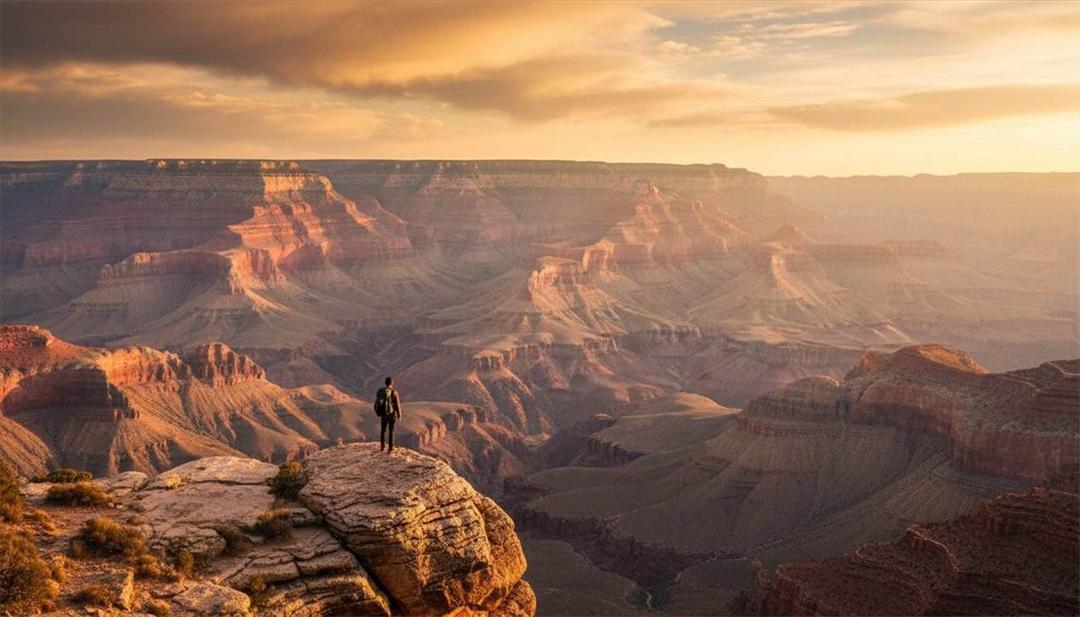
Grand Canyon Weather at a Glance
Summers at the South Rim are warm and dry, with average highs in the mid-80s°F — hot, but far more comfortable than the desert floor below. Winters are genuinely cold, with average highs in the mid-40s°F and regular snowfall on the rim itself. The single biggest factor behind all of it is elevation: the South Rim sits at roughly 7,000 feet, which is why it runs 20–30 degrees cooler than Phoenix or the inner canyon on the very same day. And no matter the season, weather at the rim can shift quickly — clear skies can turn windy or stormy within an hour, so it's worth checking the forecast the morning of your visit rather than the week before.
It helps to think of "Grand Canyon weather" as three overlapping climates rather than one. The rim itself behaves like a high-elevation mountain town — cool mornings, warm-but-not-brutal afternoons, and real winters with snow. A mile below, at the Colorado River, the climate is desert — hot nearly year-round, and dangerously hot in summer. And the drive in from Phoenix, Sedona or Flagstaff passes through several climate zones in a single afternoon. Most weather confusion first-time visitors run into comes from checking a single forecast (usually for "Grand Canyon, AZ" broadly) without realizing which of these three zones it actually describes.
As a quick-reference rule of thumb: pack for a mountain town, not a desert resort, no matter what month you're visiting. Even in the height of summer, the rim rewards a light layer for early mornings; even in winter, a sunny midday can feel comfortable enough for just a fleece. The sections below break this down season by season, then by exact monthly averages, so you can plan around the specific week you're traveling rather than a general seasonal guess.
Grand Canyon Weather by Season
Spring Weather (March–May)
Spring temperatures climb steadily, from highs in the mid-50s°F in March to the low 70s°F by May, with overnight lows still dipping into the 30s early in the season. Rain is possible but generally light and passing rather than sustained — spring storm systems tend to move through in a day rather than settling in. Wind is the bigger factor this time of year: March and April can bring genuinely gusty afternoons at the rim, strong enough to notice at exposed overlooks even when the forecast just says "breezy." A windbreaker is worth packing even on an otherwise sunny day for this reason alone.
Crowds build steadily through spring, with a notable but temporary spike around mid-March spring break, then a quieter lull before the summer rush begins in late May. By late April and into May, the rim has largely warmed into t-shirt-and-jacket territory — comfortable in direct sun, cool the moment a cloud passes or the wind picks up. This transition period is also when wildflowers begin appearing along rim trails, adding some seasonal color that's absent the rest of the year. Pack in layers: a warm morning layer you can shed by midday, plus something wind-resistant for exposed viewpoints regardless of how warm the forecast high looks.
Summer Weather (June–August)
June is hot and dry, with rim highs in the mid-80s°F and very low humidity — this is often the most predictable stretch of summer weather, with clear skies most days and minimal rain. By early July, the North American Monsoon arrives, and the weather pattern changes noticeably: afternoon thunderstorms build over the canyon most days through August, even though mornings typically stay clear and sunny. The shift from June's dry heat to July and August's monsoon pattern is significant enough that "summer" really behaves as two distinct sub-seasons.
Monsoon storms bring lightning, gusty wind, and sometimes brief, heavy rainfall, so afternoon activities need a weather-aware plan — see the dedicated Monsoon Season section below for specifics. Altitude and sun exposure make hydration critical even when the rim temperature feels manageable on paper; because the air is drier and the sun more direct at 7,000 feet, dehydration can sneak up faster than the number on a thermometer suggests. Below the rim, the elevation drop reverses this cooling effect entirely — inner-canyon heat regularly exceeds 100°F in summer and turns dangerous for midday hiking. The standard local guidance is to bring more water than feels necessary and plan any strenuous activity, especially below the rim, for the early morning hours before the heat builds.
Fall Weather (September–November)
Fall brings some of the most comfortable conditions of the year — highs easing from the upper 70s°F in September down to the mid-50s°F by November, with crisp, cool mornings that are ideal for early viewpoint visits and increasingly chilly nights as the season progresses. September often still carries a bit of monsoon-season instability in its first couple of weeks before the pattern fully breaks by early October.
The clearer, calmer air through most of fall also makes it a favorite window for photography, with softer light, fewer summer haze days, and warm-toned late-day light that plays well against the canyon's rock layers. Crowds thin out noticeably once the September Labor Day rush passes, and by October and November the South Rim feels distinctly calmer than the summer months — comparable in comfort to spring, but with a quieter, more settled feel rather than spring's building momentum toward summer.
Winter Weather (December–February)
Winter is cold and can be genuinely snowy — rim highs sit in the mid-40s°F with overnight lows commonly in the low 20s°F, and snow accumulation at the South Rim is a normal, expected part of the season rather than a rare event. Storms typically move through over a day or two, dropping anywhere from a light dusting to several inches, followed by clear, cold, sunny days that let the snow linger in shaded spots even as exposed areas melt off quickly.
Ice is the main hazard this time of year: shaded, packed-snow sections of rim trails can stay slick for days after a storm even when nearby sunny sections are bare and dry, so the trail surface can change dramatically within a short walk. Some form of traction device is worth carrying if you plan to walk below the first switchbacks in winter. Roads to the South Rim are maintained and plowed, so the park itself stays open and accessible, though winter storms can occasionally cause short delays during active snowfall. Layering matters most here — a warm base layer, insulated outer layer, and windproof shell handle the wide range between a sheltered overlook and a wind-exposed one. In exchange for the cold, winter delivers some of the most striking scenery of the year: snow dusting the canyon's red rock layers is a version of the Grand Canyon relatively few visitors ever see.
Monthly Grand Canyon Temperatures
The table below breaks the seasonal overview above down into exact monthly averages, which is the more useful reference once you know roughly when you're traveling. A few patterns are worth noticing when you scan it: the swing between a month's high and low is consistently large — often 20–25 degrees — which is the elevation and dry-air effect showing up in the numbers directly. The "shoulder" months on either side of summer (May and September) and either side of winter (November and March) tend to offer the best balance of mild temperatures and manageable crowds, which is why they come up repeatedly as favorites among frequent visitors and guides alike.
Average South Rim temperatures by month (Grand Canyon Village, ~6,800 ft elevation):
| Month | High | Low | Weather |
|---|---|---|---|
| January | 45°F | 21°F | Cold, occasional snow |
| February | 48°F | 24°F | Cold, occasional snow |
| March | 55°F | 29°F | Mild, windy |
| April | 64°F | 35°F | Mild, pleasant |
| May | 73°F | 43°F | Warm, dry |
| June | 84°F | 51°F | Hot, dry |
| July | 89°F | 60°F | Hot, monsoon begins |
| August | 86°F | 59°F | Hot, monsoon storms |
| September | 79°F | 52°F | Warm, comfortable |
| October | 67°F | 41°F | Mild, crisp |
| November | 54°F | 30°F | Cool |
| December | 45°F | 23°F | Cold, snow possible |
Figures are typical averages for the South Rim and can vary year to year.
One pattern worth reading into these numbers directly: the jump from June to July is the year's biggest single-month shift in character, even though the average high barely moves — that's the monsoon arriving, adding humidity, cloud cover and storm risk to what was, in June, simply dry heat. A similar but gentler shift happens from February into March, as winter's snow risk gradually gives way to spring's wind. Neither transition happens on a fixed calendar date, which is exactly why checking closer to your actual travel dates is more useful than relying on the monthly average alone.
Does It Snow at the Grand Canyon?
Yes — snow is a normal part of the South Rim's winter, not a rare exception. The South Rim, at roughly 6,800–7,000 feet, sees measurable snowfall most winters between November and March, with January and February the snowiest months. Accumulation varies by storm, from a light dusting to several inches, and snow can linger in shaded areas for days after it falls even as sun-exposed spots clear quickly.
The North Rim, at over 8,000 feet, gets significantly more snow and is far more affected by it — the North Rim's main facilities close for the season each winter because of it, while the South Rim (where the vast majority of visitors, and all of our tours, operate) stays open and accessible year-round. Visitors coming from a warm-weather city are often the most surprised by South Rim snow: it's entirely possible to leave 75°F sunshine in Phoenix and arrive at the rim a few hours later to find snow on the ground and temperatures 30–40 degrees cooler. For photographers in particular, a snow-dusted canyon is one of the most sought-after and least common shots — most visitors never see it, simply because most visitors don't come in winter.
Monsoon Season
The North American Monsoon typically runs from early July through August, and it's one of the most distinct weather patterns of the year at the Grand Canyon. The pattern is usually predictable in its shape, if not its exact timing: mornings are clear and dry, humidity builds through the day, and by early-to-mid afternoon, thunderstorms develop over and around the canyon, often quite suddenly. A clear blue sky at 11am can turn into a building thunderhead by 2pm with very little transition in between.
These storms bring lightning — the single biggest monsoon-season hazard at an exposed rim, where there's little natural shelter — along with strong gusty wind and heavy, brief rainfall. Below the rim, monsoon storms can also trigger flash flooding in narrow drainages and side canyons with little warning, even when it isn't raining directly overhead where you're standing; a storm miles away can send a flash flood down a dry wash minutes later. The practical safety takeaway: plan exposed viewpoint time and any hiking for the morning during monsoon season, keep an eye on building afternoon clouds rather than relying solely on a morning forecast check, and treat any thunder — even distant thunder — as a signal to move away from exposed overlooks and drainage bottoms until it passes.
Weather by Elevation
Few places illustrate elevation's effect on temperature as clearly as a single day trip through Northern Arizona. Phoenix, at roughly 1,100 feet, is the hot desert floor — summer highs regularly exceed 105°F, and even winter days are mild. Sedona, around 4,500 feet, runs noticeably cooler and greener, with a climate often described as high desert. Flagstaff, at about 7,000 feet, is a genuine mountain town with real winters, regular snow, and a ponderosa pine forest rather than desert scrub.
The Grand Canyon's South Rim sits at a similar elevation to Flagstaff, around 6,800–7,000 feet — which is why a single day's drive from Phoenix to the canyon can mean a 25–30 degree temperature drop, and why the inner canyon (which descends over a mile in elevation from the rim down to the Colorado River) can be more than 20 degrees hotter than the rim above it on the same afternoon. This is also why pickup city matters for what to expect on tour day: a Phoenix-area start means adjusting from the warmest point of the day's temperature range to the coolest, while a Flagstaff-area start means conditions stay comparatively consistent throughout. Understanding this elevation gradient is the key to packing and planning correctly — the single "Grand Canyon" temperature you see in a quick search is really several different climates stacked on top of each other, and the number that matters most is the one for the specific elevation you'll actually be standing at.
What Should You Wear?
Layering is the single most useful packing strategy for Grand Canyon weather, in any season. Mornings and evenings run noticeably cooler than midday even in summer, and the rim's wind and sun exposure change how a given temperature actually feels — a still, sunny overlook and a windy one just a short walk away can feel like entirely different climates at the same thermometer reading.
A packable jacket handles cool mornings and evenings across every season; a light rain shell covers sudden showers, especially during monsoon season, without the bulk of a heavier coat; sun protection — a hat, sunglasses, and sunscreen — matters year-round at this elevation, even on cool or overcast days, since UV exposure increases with altitude regardless of temperature; and comfortable, closed-toe footwear with real tread makes a meaningful difference on uneven, sometimes icy or loose-gravel trail surfaces, even for visitors who don't plan to hike below the rim. For a full season-by-season packing list, see our Grand Canyon Packing Guide, and if you're planning any time below the rim, our Grand Canyon Hiking Guide covers trail-specific gear and safety in more detail.
Weather Tips from Local Guides
Averages and forecasts only tell part of the story — the rest comes from actually being at the rim day after day, in every season, and noticing the patterns that don't always make it into a weather app. A few observations that come up repeatedly among guides who spend their working days outdoors here:
- Temperatures can vary dramatically between sunrise and afternoon — a viewpoint that feels cold and windy at 7am can feel entirely different by noon.
- Even in summer, mornings at the South Rim are often cool enough to want a light layer — it's easy to underestimate this when checking a forecast from home.
- Afternoon thunderstorms can develop quickly during monsoon season, often with little warning beyond a build-up of clouds — it's worth glancing at the sky periodically rather than just checking the forecast once in the morning.
- Wind at the rim is easy to underestimate from photos — exposed viewpoints can be noticeably breezier than the parking area just behind them.
- The forecast for "Grand Canyon" often reflects the rim, not the inner canyon — if any part of your day is below the rim, it's worth checking conditions for that elevation specifically, not just the rim number.
- Shaded, north-facing sections of trail hold ice and packed snow far longer into spring than sunny, south-facing sections just steps away — the trail surface can change more than the season suggests.
If you'd rather have a local guide adjust the day around changing conditions, our Private Grand Canyon Day Tour from Sedona can flex around weather, timing and conditions at the South Rim.
Let Us Keep an Eye on the Weather
Grand Canyon weather can change quickly. We keep a constant eye on weather and road conditions, especially during snowstorms, monsoon season and major weather events. Throughout the day, we monitor changing conditions and adjust the plan when needed, so your group can focus on experiencing the Grand Canyon safely and comfortably.
Frequently Asked Questions
Does it snow every winter?
Yes, in some form. The South Rim sees measurable snow most winters, typically between November and March, though amounts vary from a light dusting to several inches per storm. It's rare for a winter to pass entirely without at least one snowfall on the rim, even in comparatively mild years, and January and February are the most reliable months for it.
What is the hottest month?
July is typically the hottest month at the South Rim, with average highs around 89°F — and significantly hotter below the rim, where inner-canyon temperatures regularly exceed 100°F. August runs a close second, staying nearly as warm while adding the humidity and storm activity of ongoing monsoon season.
What is the coldest month?
January is typically the coldest, with average highs near 45°F and overnight lows commonly around 21°F. December and February are close behind, and all three winter months share the same core characteristics: cold mornings, mild-to-cool afternoons in direct sun, and the real possibility of snow.
When is monsoon season?
Roughly early July through August, bringing a pattern of clear mornings and thunderstorms that build by afternoon. The exact start and end dates shift somewhat year to year, but the underlying pattern — dry mornings, building afternoon clouds, possible storms by mid-to-late afternoon — is consistent enough to plan around throughout the entire window.
Can weather change quickly?
Yes — conditions at the rim can shift within an hour, especially wind and cloud cover, and especially during monsoon season. Checking the forecast the morning of your visit is more reliable than checking days in advance, and it's worth glancing at the sky periodically through the day rather than assuming the morning check still holds by afternoon.
What if rain is forecast?
Most rain at the Grand Canyon is brief and passing rather than an all-day event, particularly in summer, where a monsoon storm might last twenty minutes to an hour before clearing. A light rain shell is usually enough; heavier, sustained rain is less common outside of occasional winter storm systems, which tend to bring snow at the rim's elevation rather than prolonged rainfall.
How cold does it get at sunrise?
Sunrise is typically the coldest point of the day, often 20–30 degrees cooler than the afternoon high — in winter this can mean temperatures well below freezing even when the daytime high looks mild on paper. Visitors heading out for sunrise photography, in particular, are often surprised by just how cold that early window is compared to the rest of the day, even in late spring or early fall.
Should I bring a jacket in summer?
Yes — a light layer for cool mornings and evenings is worth packing even in June, July and August, when the daytime high itself feels hot. It's a small, easy item to pack and the one piece of gear summer visitors most often wish they'd brought once the sun starts dropping toward evening.
Is the North Rim's weather different from the South Rim?
Yes, noticeably. The North Rim sits over 1,000 feet higher than the South Rim, which means cooler temperatures, significantly more snow, and a much shorter operating season — its main facilities close for winter entirely, typically from mid-October through mid-May, while the South Rim stays open and staffed year-round.
Does altitude affect how hot or cold it feels?
Yes, in a few different ways beyond just the temperature reading. Thinner air at 7,000 feet means stronger UV exposure, so sun protection matters even on cool or overcast days; it also means dehydration and fatigue can set in faster than expected, especially for visitors arriving directly from a low-elevation city without time to adjust.
Is it windier at the Grand Canyon than nearby cities?
Often, yes, particularly right at exposed viewpoints. The canyon itself creates local wind effects — air moving across the rim and down into the gorge behaves differently than open, flat terrain — so a calm day in Flagstaff or Sedona doesn't guarantee calm conditions at a South Rim overlook. Spring is typically the windiest season overall, though gusty afternoons can occur in any month.
What's the best time of day for photography, weather-wise?
Early morning and late afternoon consistently offer the calmest air, the softest light, and — outside of monsoon season — the lowest chance of haze or building clouds interrupting a shot. Midday sun tends to flatten the canyon's color and contrast regardless of season, which is as much a lighting issue as a weather one, but the two considerations point toward the same golden-hour windows either way.
Continue Planning Your Grand Canyon Visit
Weather is only one piece of a well-planned visit. These related guides cover the rest — what to pack, which trails suit your fitness level, and how to plan your trip around the season you've chosen.
Best Time to Visit
Read Guide →Packing Guide
Read Guide →Hiking Guide
Read Guide →Photography Guide
Read Guide →Wildlife Guide
Read Guide →Experience the Grand Canyon in Every Season
Every season offers a different Grand Canyon experience. Whether you're visiting during the cool colors of autumn, the dramatic winter snow, the blooming spring, or the long summer days, a private guide can help you make the most of changing weather conditions while enjoying a relaxed, personalized experience. A private tour also means the day's plan can flex around the weather in a way a scheduled group departure can't — starting earlier to beat afternoon monsoon storms, adjusting a route around an icy trail section, or simply pacing the day around when the light and temperature are at their best.