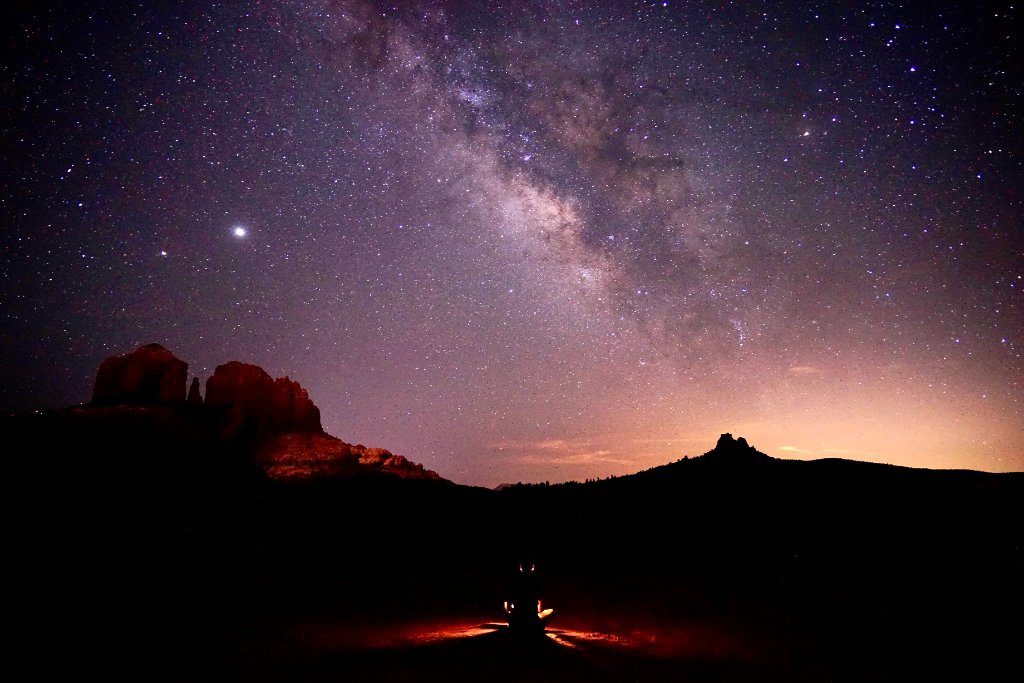
Why Arizona Is One of the World's Best Places for Stargazing
Arizona is one of the best places in the world to see a truly dark night sky. High elevation, dry desert air, minimal cloud cover, and some of the strictest outdoor lighting ordinances in the country combine to give the state an outsized share of America's best stargazing destinations — including Flagstaff, the world's very first International Dark Sky City.
From the Milky Way arching over Sedona's red rock formations to meteor showers over the Grand Canyon's open rim, Arizona's night skies reward even casual stargazers with views that are simply impossible in most of the country. This guide covers where to go, when to go, and what to expect from a night under some of the darkest skies in the continental United States.
What Makes Arizona's Skies So Dark?
Several factors combine to make Arizona exceptional for stargazing. High elevation across much of the state — Flagstaff sits at roughly 7,000 feet — means less atmosphere between observers and the stars, producing crisper, clearer views. The state's arid desert climate also means fewer cloudy nights than most of the country, and low humidity reduces the atmospheric haze that can wash out fainter stars elsewhere.
Just as importantly, Arizona has led the nation in outdoor lighting regulation for decades. Flagstaff enacted one of America's first lighting ordinances back in 1958, specifically to protect observations at nearby Lowell Observatory, and that culture of "dark sky friendly" lighting has since spread to Sedona and other communities across the state, preserving genuinely dark conditions even relatively close to populated areas.
What Is an International Dark Sky Place?
DarkSky International, a nonprofit organization dedicated to combating light pollution, certifies cities, parks, and sanctuaries that meet strict standards for minimizing artificial light and preserving night sky visibility. Certification requires documented outdoor lighting policies, public education efforts, and measurable night sky quality — it's a genuine, evaluated designation, not just a marketing label.
Arizona holds an unusually large concentration of these certified sites, including Flagstaff, Sedona, the Grand Canyon, and several state parks, giving the state one of the highest densities of officially recognized dark sky destinations anywhere in the world.
Flagstaff: The World's First Dark Sky City
Flagstaff earned the distinction of becoming the world's first International Dark Sky City in 2001, a designation built on more than 40 years of local lighting ordinances dating back to 1958. That history is directly tied to Lowell Observatory, founded in 1894 on a hill overlooking the city, where astronomers have relied on genuinely dark skies for over a century of research — including the 1930 discovery of Pluto.
Today, Flagstaff's lighting codes remain some of the strictest in the country, and the city's high elevation and clear desert air combine with that lighting discipline to produce night skies that feel remarkably close to true wilderness darkness, despite the city sitting right at the edge of town.
Sedona's Dark Sky Community
Sedona holds its own International Dark Sky Community certification, and its dramatic red rock formations add a visual element most stargazing destinations simply can't match — silhouetted buttes and spires framing the Milky Way rather than a flat horizon. Elevated viewpoints like Airport Mesa and the area around Cathedral Rock are popular for combining sunset red rock views with stargazing after dark, since the same open sightlines that make for great daytime photography work equally well after the sun goes down.
Because Sedona sits at lower elevation and closer to development than Flagstaff, the darkest skies are found by moving slightly away from the town center — a short drive toward Red Rock State Park or the surrounding national forest noticeably deepens the darkness.
Stargazing at the Grand Canyon
The Grand Canyon is itself an International Dark Sky Park, and its remote, high-elevation South Rim offers some of the darkest, clearest skies in Arizona. The park hosts an annual Star Party each June, drawing astronomers and telescopes from around the country for a week of ranger programs, public viewing, and night sky presentations along the rim.
Even outside the Star Party, any clear night away from the South Rim's developed areas offers exceptional stargazing, with the canyon's vast open sky and minimal surrounding light pollution producing conditions most visitors never experience at home.
Lowell Observatory and Kitt Peak
Lowell Observatory in Flagstaff is open to the public, offering daytime tours, evening telescope viewing, and exhibits covering the observatory's long history — including the discovery of Pluto by Clyde Tombaugh in 1930. It remains an active research facility today, making it a rare chance to combine real astronomical science with public stargazing access.
Farther south, Kitt Peak National Observatory near Tucson houses one of the largest collections of research telescopes in the world, and offers public programs including nighttime observing sessions for visitors willing to make the drive into southern Arizona's own dark sky country.
Best Dark Sky Locations in Arizona
| Location | Why It's Great |
|---|
| Flagstaff | World's first Dark Sky City; Lowell Observatory |
| Sedona | Dark Sky Community with dramatic red rock silhouettes |
| Grand Canyon South Rim | Dark Sky Park; annual Star Party each June |
| Kitt Peak | Major research observatory with public programs |
| Petrified Forest National Park | Dark Sky Park with wide-open badland horizons |
Best Time of Year and Moon Phases
Late spring through fall generally offers Arizona's clearest, driest stargazing conditions, with minimal cloud cover outside the summer monsoon season. Winter can also produce exceptionally crisp, clear skies, though cold temperatures at higher elevations like Flagstaff require serious preparation.
Regardless of season, timing a trip around the new moon — when the moon is darkest or entirely absent from the night sky — makes an enormous difference for viewing the Milky Way and fainter deep-sky objects. A bright full moon can wash out all but the brightest stars, even under otherwise excellent dark-sky conditions.
What You Can See
On a clear, dark Arizona night, the Milky Way's bright core is visible to the naked eye for much of the year, especially during summer months when it arcs high overhead after dark. Planets including Jupiter, Saturn, Venus, and Mars are regularly visible without any equipment, appearing as steady, non-twinkling points of light. Meteor showers throughout the year, including the Perseids each August, are considerably more dramatic under Arizona's dark skies than in most of the country, and the International Space Station is visible as a fast-moving point of light during predictable overhead passes.
Stargazing Equipment Tips
No equipment is required to enjoy Arizona's night skies — the Milky Way, bright planets, and major constellations are all visible to the naked eye under genuinely dark conditions. A simple pair of binoculars, however, noticeably improves views of the Milky Way's star clouds and brighter deep-sky objects without the cost or setup complexity of a telescope.
For visitors bringing a telescope, allowing at least 20–30 minutes for eyes to fully adjust to the darkness makes a significant difference, and a red-light flashlight (rather than white light) helps preserve that night vision while setting up or reading star charts.
Photography Tips
Milky Way photography generally requires a camera capable of manual settings, a wide-angle lens, and a sturdy tripod, since capturing faint starlight requires exposures of several seconds or longer. Shooting during the new moon, away from any artificial light sources, produces the most dramatic results, and framing a foreground element — a red rock formation, a canyon rim, or a lone tree — gives night sky photos a sense of scale and place that a sky-only shot lacks.
Sedona's silhouetted rock formations and the Grand Canyon's dramatic rim edges are both popular, effective foregrounds for exactly this reason. See our Arizona Photography → guide for more region-wide tips.
Safety and Preparation
Desert nights get considerably colder than daytime temperatures suggest, even in summer, so bringing warm layers is essential regardless of season. Higher-elevation locations like Flagstaff and the Grand Canyon can drop close to freezing on clear nights even outside winter, since clear skies that make for great stargazing also allow heat to radiate away quickly after sunset.
Navigating in the dark on unfamiliar terrain carries real risk — bring a reliable flashlight, stay on established trails and viewpoints, and let someone know your plans if you're heading to a remote location after dark.
Nearby Attractions
Arizona's best stargazing spots sit alongside some of its most iconic daytime destinations.
Sedona
Red rock formations by day, Dark Sky Community by night.
READ GUIDE →Flagstaff
The world's first International Dark Sky City.
READ GUIDE →Grand Canyon National Park
A Dark Sky Park with an annual Star Party.
READ GUIDE →Petrified Forest National Park
Wide-open badland horizons and certified dark skies.
READ GUIDE →
Frequently Asked Questions
Why is Arizona so good for stargazing?
Arizona combines high elevation, low humidity, minimal cloud cover, and large areas of protected dark sky, plus some of the strictest outdoor lighting ordinances in the country in cities like Flagstaff.
What is an International Dark Sky Place?
It's an official certification from DarkSky International recognizing communities, parks, or sanctuaries that meet strict standards for minimizing light pollution and preserving night sky visibility.
Is Flagstaff really the world's first Dark Sky City?
Yes — Flagstaff was designated the world's first International Dark Sky City in 2001, following decades of local lighting ordinances dating back to 1958.
Can you see the Milky Way from Sedona?
Yes, from darker spots away from town lights — Sedona is a certified Dark Sky Community, and the Milky Way is visible on clear, moonless nights, especially from elevated viewpoints like Cathedral Rock and the Airport Mesa overlook.
What is the best time of year for stargazing in Arizona?
Late spring through fall generally offers the clearest, driest skies; new moon periods any time of year provide the darkest conditions for viewing the Milky Way and faint deep-sky objects.
Do I need a telescope to stargaze in Arizona?
No — Arizona's dark skies are impressive to the naked eye, though binoculars or a telescope reveal considerably more detail in the Milky Way, planets, and deep-sky objects.
Is Lowell Observatory open to the public?
Yes — Lowell Observatory in Flagstaff offers public tours, telescope viewing, and exhibits, and is where Pluto was discovered in 1930.
Can you stargaze at the Grand Canyon?
Yes — the Grand Canyon is an International Dark Sky Park, and the South Rim hosts an annual Star Party alongside excellent year-round stargazing away from developed areas.
Why Go Stargazing in Arizona?
Few places in the world combine Arizona's specific mix of high elevation, dry desert air, and decades of committed dark-sky lighting policy — the result is a state where the Milky Way, planets, and meteor showers remain vividly visible in a way most Americans never get to experience. Whether from Flagstaff's certified dark skies, Sedona's dramatic red rock silhouettes, or the Grand Canyon's open rim, Arizona stargazing offers a genuinely different, humbling perspective on a landscape already known for its daytime beauty.
Continue Exploring Signature Arizona Experiences
Arizona's dark skies pair naturally with the rest of the region's signature experiences. If you'd like to see the Milky Way over Sedona's red rocks with an expert guide handling the logistics, Grand Canyon Journeys' Stargazing Tour takes care of timing, location, and equipment for you.
Arizona Wine Country
The Verde Valley's high-desert vineyards have quietly become one of the Southwest's mos...
READ GUIDE →Hot Air Ballooning
Sunrise balloon flights over the desert offer a uniquely peaceful way to take in Arizon...
READ GUIDE →