
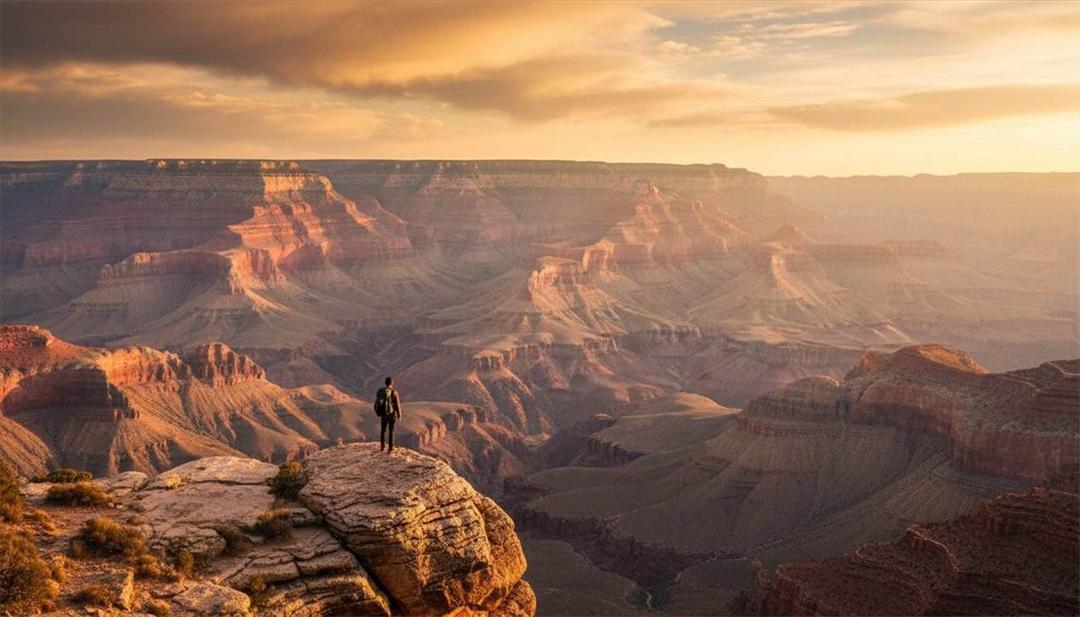
Is Hiking the Grand Canyon Right for You?
Not every visit to the Grand Canyon needs to include a hike below the rim — and that's worth saying clearly before anything else in this guide. Millions of people experience the canyon fully from the rim itself, and there's no version of a Grand Canyon trip that requires stepping onto a descending trail to feel complete. But for those who are drawn to it, hiking here is one of the most rewarding ways to experience the canyon — and also one of the most physically demanding, in ways that surprise even experienced hikers who've never done anything quite like it before.
The first thing to understand is that every hike here is different, not just in distance but in what the canyon itself demands of a person on any given day. Two people with similar fitness levels can have completely different experiences on the same morning, depending on how well they prepared, how much water they carried, and how honestly they assessed their own limits before starting out. That variability is part of what makes generic advice about Grand Canyon hiking so unreliable — what's manageable for one visitor on a cool October morning can be genuinely risky for another on a hot July afternoon, even if the distance on a map looks identical.
Hiking into the canyon is also, almost without exception, much harder than visitors expect walking in. This isn't hyperbole meant to sound dramatic — it's one of the most consistent pieces of feedback rangers and guides hear from visitors who've had a rough day on the trail. The canyon has a way of feeling deceptively approachable from the rim, and the real difficulty of what's involved doesn't become obvious until well into the descent, at which point the only way back is the hardest part of the entire hike.
Fitness matters here in a way that's easy to underestimate from a distance. General cardiovascular fitness helps, but it isn't the whole picture — the specific demands of a sustained climb at elevation, in heat, use muscles and stamina differently than most everyday exercise does. Someone who runs regularly at sea level may still find the return climb here more difficult than expected, simply because nothing in their regular routine mimics what a below-the-rim hike actually asks of the body.
Preparation matters just as much as fitness, and arguably more, since it's the part every visitor has full control over regardless of their starting fitness level. The visitors who have the best days here are rarely the most athletic ones — they're the ones who prepared honestly: who drank enough water beforehand, ate well, checked the forecast, wore the right footwear, and turned around when it was the right call rather than pushing on out of stubbornness or a schedule.
That's really the core message of this entire guide: every visitor considering a hike here should take an honest look at their own fitness, health, and comfort with physical exertion before deciding how far below the rim to go, if at all. There's no shame in a short walk instead of a longer descent — and there's real risk in underestimating what a below-the-rim hike involves simply because the view from the top doesn't fully communicate it.
Why Hiking the Grand Canyon Is More Challenging Than It Looks
This is the section every visitor should read closely before deciding how far to go below the rim. The Grand Canyon has a genuinely unusual set of physical conditions that combine in ways most hikers haven't encountered anywhere else, and understanding them in advance is the single best thing anyone can do to have a safe, enjoyable day here.
Steep Elevation Changes
The trails here don't ease into elevation change gradually the way many hiking trails elsewhere do — they drop steeply and consistently from the very first steps, often losing hundreds of feet of elevation within the first mile. That steep, sustained grade is deceptively easy on the way down, since gravity is doing most of the work, but it's exactly what makes the return climb so demanding later in the day.
High Elevation
The South Rim sits at roughly 7,000 feet above sea level, which is high enough to affect breathing and stamina for visitors arriving from lower elevations, even before any hiking begins. Altitude affects people differently — some notice it immediately, others barely notice it at all — but it's a real factor that adds difficulty to any physical activity here, hiking included, especially in the first day or two after arrival.
Heat
Temperatures below the rim are often significantly warmer than temperatures at the rim itself, sometimes by twenty degrees or more, because the inner canyon traps heat in a way the exposed rim doesn't. A pleasant, mild morning at the trailhead can turn into genuinely dangerous heat a few thousand feet lower by midday, particularly in summer, which is part of why timing and turnaround decisions matter so much here.
Dry Air
Arizona's dry air accelerates dehydration in a way that's easy to underestimate, because the usual visual cue of heavy sweating is often absent — moisture evaporates almost as fast as it forms, so hikers can lose significant fluid without feeling as damp or as obviously thirsty as they would in a more humid climate. That makes it easy to fall behind on hydration without realizing it until symptoms are already setting in.
Limited Shade
Much of the trail system below the rim offers very little natural shade for long stretches, particularly through the middle of the day when the sun is most direct. Without tree cover or canyon-wall shadow to rely on, sun exposure becomes a cumulative factor over the course of a hike, adding to heat and dehydration risk in a way that's easy to overlook when planning based on distance alone.
The Uphill Return
This is the piece that catches the most hikers off guard: the return climb happens later in the day, when it's typically hotter, when hikers are already more tired and more dehydrated than they were at the start, and when elevation gain works directly against momentum rather than with it. Many experienced hikers report that the climb out is the hardest part of the entire day by a wide margin — harder, often, than the descent and the time spent below the rim combined.
Together, these six factors are why hiking here consistently surprises even visitors who consider themselves experienced, fit hikers elsewhere. None of them is a reason to avoid hiking at the Grand Canyon — they're simply the reasons preparation matters as much as it does, which is exactly what the rest of this guide is built around. This immediately establishes what separates a great day on the trail from a genuinely dangerous one.
Preparing for Your Hike
Good preparation doesn't eliminate the challenges described above, but it does make them manageable — and it's almost entirely within every visitor's control, regardless of natural fitness level. Here's what matters most in the days and hours before a hike here.
Physical Fitness
Building general cardiovascular fitness in the weeks before a visit helps, but the most useful preparation specifically targets sustained climbing — stairs, hills, or a stepper machine mimic the demands of the return hike far better than flat-ground walking or running does. Even a few weeks of regular stair or incline training can make a noticeable difference in how the climb out feels.
Hydration
Hydration preparation starts before the hike, not during it — arriving already well-hydrated matters more than most visitors realize, since it's difficult to fully catch up once a deficit builds during exertion in heat and dry air. Drinking consistently in the days leading up to a hike, not just the morning of, gives the body a far better starting point.
Nutrition
A hike here burns more energy than its distance alone would suggest, given the elevation, heat, and grade involved, so a solid meal beforehand and steady snacking throughout matters more than most visitors expect. Salty, energy-dense snacks help replace what's lost through exertion in a way that plain water alone doesn't address.
Footwear
Broken-in, supportive footwear with real tread is one of the simplest and most important preparation decisions a hiker can make — new shoes, however well-reviewed, are far more likely to cause blisters on a long descent and climb than a pair that's already proven comfortable. This is not the place to test new gear for the first time.
Weather
Checking the forecast — for both the rim and, if available, the inner canyon — the day before and the morning of a hike is a simple step that meaningfully changes how a day should be planned. Conditions can shift quickly here, and a hike that looked reasonable on paper the night before can look very different in the actual heat, wind, or storm activity of the day.
Know Your Limits
Perhaps the most important preparation of all is mental: deciding in advance, before fatigue and heat start influencing judgment, what a realistic turnaround point looks like — and committing to respecting it even if it means turning back earlier than originally planned. The hikers who have the best days here are consistently the ones willing to make that call honestly, rather than the ones who pushed the furthest.
Grand Canyon Hiking Safety
Safety is the single most important theme in this entire guide, and it deserves a section of its own beyond the preparation tips above. These are the risk factors every hiker here should understand and actively manage, regardless of experience level or how far below the rim they plan to go.
Heat exhaustion and heat stroke are the most common serious risks hikers face here, especially in summer. Watch for heavy sweating, dizziness, nausea, or confusion, and treat any of these as a signal to stop, cool down, and reassess immediately.
Because Arizona's dry air masks how much fluid the body is losing, dehydration can advance further than expected before it feels obvious. Drinking consistently and proactively, rather than only when thirsty, is the most effective prevention.
Elevation affects breathing, stamina, and in some cases sleep and appetite for the first day or two after arrival, particularly for visitors coming from lower-elevation areas. Giving the body a little time to adjust is a reasonable precaution.
The canyon is home to a range of wildlife, from elk and mule deer to reptiles including rattlesnakes. Most encounters are entirely safe when animals are given space and are never approached or fed — awareness and distance matter most.
Trail surfaces vary from packed dirt to loose gravel and exposed rock, and edges in some areas have significant drop-offs. Watching footing rather than the scenery while walking, especially near edges, prevents most fall-related incidents.
Conditions can shift quickly, particularly during monsoon season, when clear mornings can give way to afternoon storms with little warning. Checking forecasts and being willing to adjust plans is genuinely important here, not optional.
Cell service is unreliable or nonexistent in much of the inner canyon, so it's worth telling someone outside your group your general plan and expected return time before setting out.
Groups that split up on the trail lose one of their best safety resources: each other. Hiking at the pace of the slowest member, and not leaving anyone alone below the rim, keeps small problems from becoming serious ones.
Hiking During Each Season
Conditions below the rim change dramatically across the year, and what counts as good preparation in one season can be entirely wrong in another. Here's what to expect and how to prepare, season by season.
Spring
Spring hiking conditions swing widely — mild, pleasant mornings can give way to genuinely hot afternoons by late April or May, while early spring mornings can still start near freezing. Layering is essential, and it's worth preparing for both ends of that range on the same day rather than assuming the forecast high tells the whole story.
Summer
Summer is the most physically demanding season for hiking here, with inner-canyon temperatures regularly exceeding 100°F by midday. Early starts, significantly more water than feels necessary, and a willingness to turn around well before the heat peaks are all essential rather than optional in summer conditions.
Fall
Fall generally offers some of the most comfortable hiking conditions of the year, particularly in October and early November, as temperatures moderate from summer highs. Early fall can still carry some monsoon-season heat and storm risk, so it's worth treating September more like late summer than true fall when preparing.
Winter
Winter brings ice and packed snow to higher-elevation and shaded sections of trail, along with genuinely cold temperatures, especially at the rim and in early morning hours. Traction devices for footwear, warm layers, and awareness that daylight hours are considerably shorter all become important winter-specific preparation.
What to Bring on a Grand Canyon Hike
A full hiking packing list deserves its own dedicated breakdown, which is exactly what our Grand Canyon Packing Guide provides in detail — including seasonal packing lists, footwear guidance, and a complete printable checklist. Here's a quick summary of the essentials specific to hiking, beyond general sightseeing gear:
For the complete list, including seasonal variations and everything else worth packing for a full day at the canyon, see our full Grand Canyon Packing Guide.
Wildlife You May Encounter
Hikers below the rim have a good chance of spotting wildlife that's harder to see from the rim itself. Respectful, distant observation is always the right approach — approaching or feeding any wild animal here is both unsafe and prohibited. For a full breakdown of what lives in and around the canyon, see our Grand Canyon Wildlife Guide.
California condors are among the rarest birds in North America, and the canyon is one of the best places in the country to see them soar on canyon thermals. Never approach a perched condor or leave food unattended.
Common and highly intelligent, ravens are frequently seen at overlooks and rest areas, where they've learned to associate hikers with food. Keep snacks secured, since ravens are bold enough to take unattended food quickly.
Mule deer are commonly seen along rim trails and occasionally below the rim, generally unbothered by hikers who keep a respectful distance. They should never be fed or approached closely, particularly during fall mating season.
Desert bighorn sheep are occasionally spotted on steep, rocky terrain below the rim, sure-footed in places that look nearly vertical. They're generally shy and keep their distance on their own.
Numerous lizard species are common sights on sun-warmed rocks throughout the canyon, entirely harmless and often more curious about hikers than fearful. They're best enjoyed by watching quietly rather than approaching.
Several snake species live in the canyon, including rattlesnakes, most active in warmer months. Watching the trail rather than only the scenery, and never reaching into rock crevices without looking first, avoids most encounters.
Weather and Hiking Conditions
Weather has a direct, sometimes serious impact on hiking conditions here, and it's worth checking before every hike rather than assuming yesterday's conditions will hold. For a full seasonal breakdown of temperatures, monsoon patterns, and more, see our complete Grand Canyon Weather Guide. A few hiking-specific weather factors are worth calling out on their own:
- Summer heat — inner-canyon temperatures that regularly exceed rim temperatures by a wide margin
- Monsoon storms — sudden afternoon thunderstorms, most common July through August
- Winter ice — packed snow and ice on shaded or higher-elevation trail sections
- Wind — can be strong and sudden at exposed viewpoints and canyon edges
- Rapid temperature changes — conditions that shift meaningfully between rim and inner canyon, and between morning and afternoon
Common Hiking Mistakes
Most hiking problems here trace back to one of a small handful of avoidable mistakes. Recognizing them in advance is one of the simplest ways to have a safer, more enjoyable day.
A late start means hiking through the hottest part of the day and returning even later, when heat and fatigue are both at their worst. Early starts are one of the most effective safety decisions a hiker can make.
Waiting until feeling thirsty means already falling behind — hydration works best as a steady, proactive habit rather than a reaction to thirst.
Arriving from a low-elevation area and expecting normal stamina on day one is a common and avoidable miscalculation. Giving the body time to adjust matters more than most visitors expect.
Untested footwear is one of the most preventable sources of a ruined hike. Broken-in shoes beat brand-new ones every time, regardless of price or reviews.
The climb out is consistently harder than the descent, and planning as though the hike is "half done" at the bottom is a common, risky miscalculation.
Appetite often drops in heat even as the body's energy needs rise, making it easy to under-eat exactly when more fuel is needed most.
Conditions change quickly here, and a hike planned around yesterday's weather can turn out very differently than expected.
Overestimating distance or ambition on a first visit is one of the most common regrets hikers report — a shorter, well-executed hike beats an overly ambitious one nearly every time.
Local Guide Tips
These are the observations that come up again and again from guides who've spent day after day on this trail system, in every season.
- The canyon is usually warmer than the rim — sometimes by twenty degrees or more, so don't judge conditions below by how it feels standing at the trailhead.
- Morning starts are almost always more comfortable than afternoon ones, both for temperature and for trail traffic — earlier is nearly always better here.
- Layering clothing works better than one heavy jacket, since temperature and exertion both change throughout a hike in ways a single heavy layer can't adapt to.
- Comfortable footwear matters more than expensive gear — a well broken-in, supportive shoe consistently outperforms an expensive but untested boot.
These are the kinds of practical insights that come from guiding this trail system day after day in every season — they won't replace a guided experience, but they'll help any hiker start the day better prepared.
Hiking Myths About the Grand Canyon
A few persistent myths lead more hikers into trouble here than almost anything else. Here's what's actually true.
"If I can walk 5 miles at home, I'm ready for any Grand Canyon hike."
RealityElevation changes, heat, and dry air make hiking here much more demanding than most visitors expect, regardless of how comfortable five flat miles feels elsewhere.
"The hardest part is hiking down."
RealityMany hikers find the uphill return to be the most physically demanding part of the entire day, often by a significant margin.
"It won't be that hot because I'm in Arizona's mountains."
RealityTemperatures can change dramatically with elevation, and conditions below the rim are often much warmer than at the South Rim, sometimes by twenty degrees or more.
"I'll just turn around if it gets too hard."
RealityBy the time a hike feels too hard, the return climb — the most demanding part of the day — still has to happen. Planning a conservative turnaround point before starting is a far better strategy than deciding in the moment.
"One bottle of water is enough for a short hike."
RealityEven short below-the-rim hikes can require significantly more water than expected, especially in heat, given how quickly dry air accelerates fluid loss.
Frequently Asked Questions
Do I need hiking boots?
Not necessarily. For shorter, easier hikes, comfortable closed-toe shoes with good tread are often enough. For longer or more strenuous below-the-rim hikes, sturdier footwear with ankle support becomes more worthwhile, particularly on trails with loose rock or steep grades.
How much water should I carry?
More than feels necessary. A general guideline is roughly one liter per hour of hiking in warm conditions, though needs vary by person, pace, and heat. Bringing more than the minimum you expect to need is always the safer choice.
Is hiking difficult?
It can be, more so than many visitors expect — the combination of elevation, heat, dry air, and a demanding return climb makes even moderate hikes here feel harder than similar-distance hikes elsewhere. Honest self-assessment and good preparation make the biggest difference in how difficult it actually feels.
Can beginners hike at the Grand Canyon?
Yes, with the right preparation and realistic expectations. Beginners should start conservatively, prioritize hydration and turnaround timing, and be willing to keep a hike shorter than originally planned if conditions or how they're feeling suggest it.
Should children hike?
Many families do hike here successfully, but it depends heavily on the child's age, fitness, and the length and difficulty of the hike being considered. Shorter, well-prepared hikes with plenty of water and shade breaks tend to work best for younger hikers.
How hot does it get?
Below-the-rim temperatures regularly exceed 100°F in summer, often significantly warmer than temperatures recorded at the rim itself. Even outside summer, inner-canyon heat can be more intense than the forecast for the rim suggests.
What should I wear?
Lightweight, breathable layers, broken-in supportive footwear, and sun protection are the foundation for nearly any season here. Our Grand Canyon Packing Guide covers seasonal specifics in more detail.
What if it rains?
Light, brief storms are common during monsoon season and generally pass quickly, but trail surfaces can become slick and washes can flow suddenly. Carrying a packable rain layer and being willing to pause or turn back during active storms is the safest approach.
Continue Planning Your Grand Canyon Visit
Hiking is easier to prepare for once the rest of your visit is planned. These related guides cover timing, weather, gear, and more.
Experience the Canyon with an Expert Guide
Hiking at the Grand Canyon is an unforgettable experience, but preparation makes all the difference. Our private guided hiking tours are designed around your group's interests, pace, and comfort level. With knowledgeable local guides handling the planning, you can focus on enjoying one of the world's greatest natural wonders.