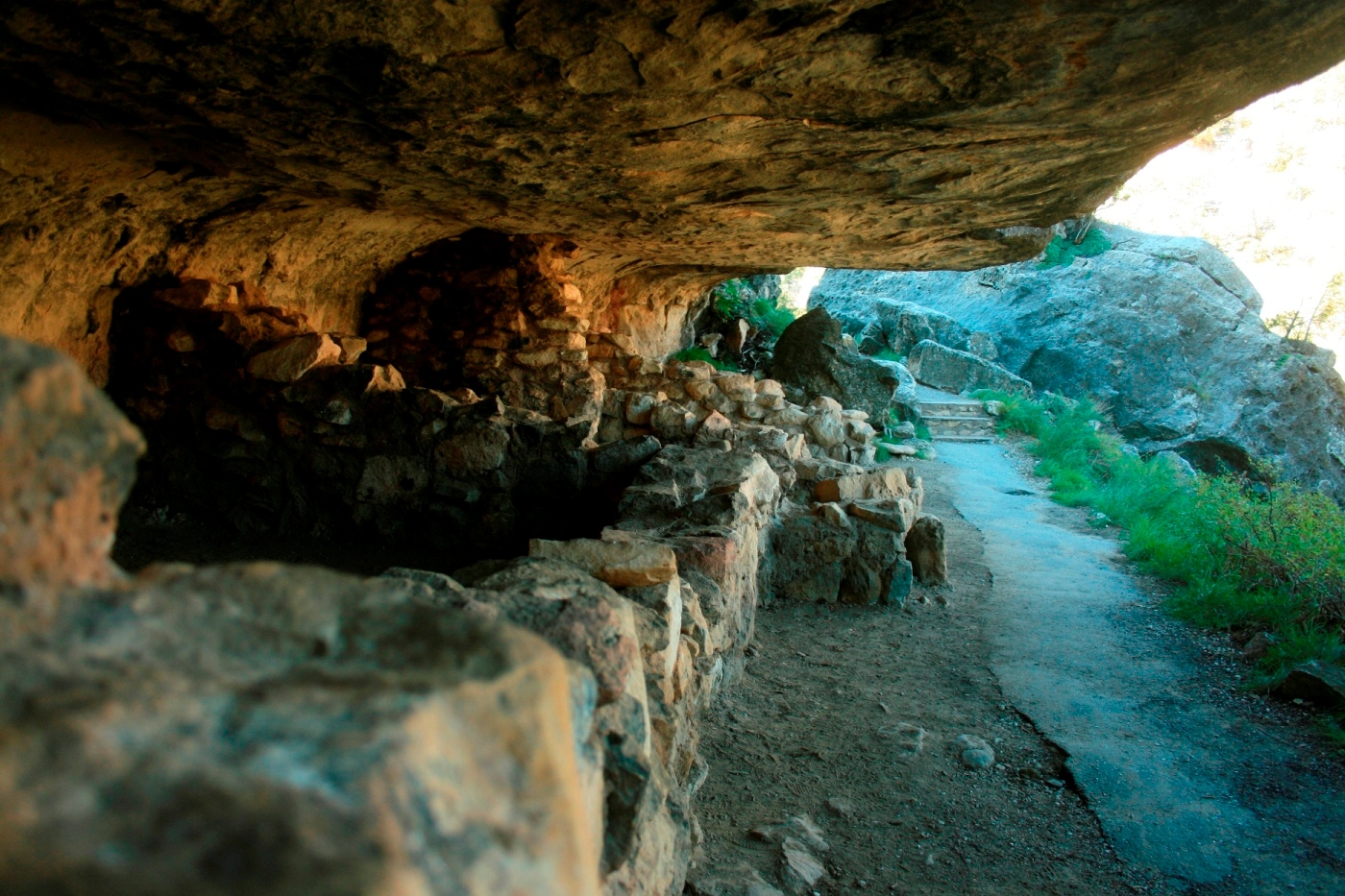
Walnut Canyon National Monument at a Glance
Ten miles southeast of Flagstaff, a limestone canyon cuts nearly 400 feet into the ponderosa pine forest — and tucked into its walls are homes built by hand, nearly 800 years ago, by people who understood this landscape better than most of us ever will. Most descriptions stop at "ancient cliff dwellings," but the real story here is about design: a community that studied its canyon closely enough to build homes that worked with it, not against it. Before diving into that story, here's the monument at a glance:
Located Near Flagstaff
About 10 miles southeast
Protected National Monument
Managed by the National Park Service
Ancient Cliff Dwellings
Built directly into limestone alcoves
20+ Preserved Cliff Homes
Visible along the Island Trail
Home of the Sinagua People
Roughly 1125 — 1250 CE
National Park Service Site
Preserved for research and visitation
Why Visit Walnut Canyon National Monument?
Walnut Canyon rewards a slower look — the kind that notices not just the dwellings, but the thinking behind them. Here's what makes it worth the stop:
Cliff Dwellings
Homes built directly into the canyon wall, still standing after nearly 800 years.
Beautiful Canyon Scenery
Layered limestone cliffs wrapped in ponderosa pine forest.
Indigenous History
A rare, close-up look at how the Sinagua people designed homes around their landscape.
Archaeology
Over 300 documented rooms, among the best-preserved cliff dwellings in the Southwest.
Wildlife
Mule deer, wild turkeys, and forest birds moving through the canyon and rim forest.
Forest Ecosystems
Ponderosa pine, juniper, and oak supporting a surprisingly rich high-elevation habitat.
Geology
Limestone cliffs formed by ancient seas, later carved by Walnut Creek.
Photography
Warm stone dwellings framed by pine forest, especially striking in golden-hour light.
The Story of Walnut Canyon
The Sinagua People
The name "Sinagua" comes from the Spanish sin agua, meaning "without water" — a name given centuries later by Spanish explorers struck by how little visible water the region seemed to offer, despite clear evidence of thriving farming communities. It wasn't a name the people used for themselves, but it has stuck as the term archaeologists use for this distinct Northern Arizona culture. The Sinagua were skilled farmers, growing corn, beans, and squash on the canyon rim and in nearby drainages, supplementing their diet with wild plants and game from the surrounding forest. Daily life centered on the rhythms of a high-elevation growing season, and centuries of adaptation had taught these communities how to make a demanding landscape reliably productive. Archaeologists have identified Sinagua settlements across a wide stretch of Northern Arizona, from the volcanic highlands near Sunset Crater to the Verde Valley farther south, suggesting a broad, interconnected culture rather than a single isolated group.
Why People Built Homes in the Cliffs
Building directly into the canyon's limestone alcoves wasn't a matter of necessity or lack of options — it was a genuinely smart adaptation to the local climate. The canyon walls provided natural shelter from wind and weather, and the overhanging limestone ledges above many dwellings offered built-in protection from rain and snow without any construction at all. Just as importantly, the canyon's rock mass moderated temperature swings, staying cooler in summer and retaining warmth in winter compared to the open rim above — a natural form of climate control centuries before the concept had a name. Building materials were close at hand too: local limestone for walls, and mud and plant fiber for mortar, meaning homes could be built efficiently without hauling materials over long distances. It's worth pausing on just how efficient this was as a strategy: rather than building a structure from the ground up, the Sinagua were, in effect, finishing a shelter the canyon had already begun.
Everyday Life
Life in Walnut Canyon revolved around a mix of agriculture, hunting, gathering, and trade. Families farmed the canyon rim during the growing season, supplementing their harvests with game hunted in the surrounding forest and wild plants gathered seasonally, including pinyon nuts, walnuts, and other wild foods that gave the canyon its modern name. Trade connected Walnut Canyon's residents to other Sinagua communities and neighboring cultures across the region, bringing in goods and ideas from beyond the canyon, likely including obsidian, pottery, and ornamental materials not locally available. Family life and community were central to how the canyon functioned — dwellings were built close together in the same alcoves, suggesting related families or working groups shared space, resources, and daily responsibilities rather than living in isolation. Archaeologists estimate the canyon was home to roughly a hundred people at its peak, spread across dozens of separate alcove dwellings rather than concentrated in one large structure.
Why the Cliff Dwellings Were Eventually Left
By around 1250 CE, the cliff dwellings of Walnut Canyon had been abandoned — part of a broader pattern of migration seen across Sinagua and other ancestral Puebloan communities in the region during this period. As with nearby Wupatki, researchers point to a combination of contributing factors rather than a single cause: a shifting, less predictable climate that made farming harder to sustain, gradual depletion of nearby resources like firewood and fertile soil after generations of use, and wider regional migration patterns that were reshaping communities across the Southwest. It would be an oversimplification to point to any one factor alone — the honest answer is that scholars continue to study exactly how these pressures combined, and the people who left Walnut Canyon carried their knowledge and traditions onward to new communities, some of which are the direct ancestors of Hopi clans today. In that sense, the "end" of Walnut Canyon as a settlement wasn't really an ending at all — it was a continuation, carried forward by the descendants of the people who built it.
The Cliff Dwellings
The dwellings themselves are Walnut Canyon's centerpiece, and they reward close attention — every design choice reflects a deep understanding of the canyon that built it. Along the popular Island Trail, visitors can see more than 20 individual rooms up close, part of a much larger network of over 300 documented rooms spread throughout the wider canyon.
Construction
Builders used naturally occurring limestone alcoves as a head start, then closed them in with walls of shaped limestone blocks, fitted together with mud mortar. Rather than building freestanding structures, the Sinagua let the canyon do much of the structural work, adding only what the natural alcove didn't already provide. Wall thickness and shape varied from dwelling to dwelling, adjusted to each alcove's particular size, depth, and orientation to the sun.
Room Layouts
Rooms were generally compact, arranged in clusters that shared walls and alcove space, with some dwellings containing multiple connected rooms for a single family or group. Doorways were often small and low, helping retain heat and limiting exposure to wind and weather — a detail that surprises many modern visitors used to thinking of doorways as simply functional, rather than a deliberate climate feature.
Daily Living
Interior spaces served multiple functions — cooking, sleeping, and craft work all likely happened within the same compact rooms, with outdoor spaces on the ledges used for tasks that needed more room or better light, like food preparation and tool work. Soot stains still visible on some ceilings today mark where cooking fires once burned, a small but vivid physical trace of daily life inside these rooms.
Food Storage
Smaller, more enclosed rooms within many dwellings appear to have been used for storing surplus corn and other harvested food, protected from moisture and pests by the dry, sheltered conditions of the alcoves — a natural pantry built into the rock itself. Reliable storage like this would have been essential for surviving lean growing seasons at this elevation, where a single poor harvest could otherwise mean real hardship.
Building Materials
Everything came from the immediate surroundings: local limestone for walls, timber from the surrounding forest for support beams, and mud and plant fiber for mortar and plaster. Nothing needed to be carried in from far away, which made construction and repair genuinely sustainable over generations, since materials for upkeep were always close at hand rather than requiring long-distance transport.
Natural Engineering
The canyon itself did as much work as any human-built wall. Overhanging cliffs shielded dwellings from direct sun, rain, and snow; the thick limestone mass buffered against extreme temperature swings between day and night, and summer and winter; and the canyon's depth offered shelter from the wind that sweeps across the open rim above. In effect, the Sinagua weren't just building in the canyon — they were building with it, treating the landscape as a design partner rather than an obstacle to overcome.
Why Build Homes in a Cliff?
Laid out side by side, the logic behind the canyon dwellings becomes clear — this wasn't a random choice, but a thoughtful, practical response to a demanding environment.
| Challenge | How the Cliff Dwellings Helped |
|---|
| Summer heat | Natural shade and cooler temperatures from the overhanging rock and alcove depth |
| Winter cold | Rock walls helped reduce wind exposure and retained warmth from the sun-warmed stone |
| Rain and snow | Overhanging cliffs provided built-in protection without additional construction |
| Building materials | Local limestone was readily available right at the building site |
| Daily living | Homes were integrated into the canyon landscape rather than imposed on it |
The Geology of Walnut Canyon
Walnut Canyon's story starts long before anyone lived here. Its walls are built from layers of Kaibab Limestone and Coconino Sandstone, laid down when this part of Arizona lay beneath a shallow ancient sea roughly 270 million years ago — the same rock layers, in fact, that cap the rim of the Grand Canyon far to the north. Over millions of years, Walnut Creek slowly cut down through these layers, carving a canyon nearly 400 feet deep and exposing the same alcoves and ledges that would later shelter the Sinagua. The limestone's tendency to erode into shallow, shelf-like alcoves, rather than sheer, featureless cliffs, is precisely what made this stretch of canyon so well suited to habitation in the first place.
Erosion continues to shape the canyon today, gradually widening alcoves and reshaping ledges — a reminder that the canyon the Sinagua built into nearly a thousand years ago is still, slowly, changing shape. For a deeper look at the geological forces that shaped this and other Northern Arizona landscapes, see our full Arizona Geology → guide.
Plants and Wildlife
The canyon's mix of elevation and microclimates supports a surprisingly rich mix of plant and animal life. Tall ponderosa pine dominates the rim forest, joined by juniper and oak in drier, rockier stretches of the canyon, with the canyon's varied sun exposure creating noticeably different plant communities on its north- and south-facing walls. Mule deer are a common sight browsing near the rim, especially early and late in the day, while wild turkeys move through the forest in small flocks, their calls often audible before the birds themselves come into view. Ravens frequently soar along the canyon walls, joined by a variety of smaller forest birds, and squirrels are a near-constant presence in the ponderosa pine canopy, foraging among the cones and undergrowth. In spring, seasonal wildflowers add color to the forest floor and canyon rim, a brief but welcome contrast to the muted greens and grays of the rest of the year.
For a closer look at the animals found throughout the wider region, see our full Arizona Wildlife → guide.
Walnut Canyon Through the Seasons
Spring
Wildflowers appear along the rim and canyon floor, paired with some of the year's most pleasant, comfortable hiking weather.
Summer
The surrounding forest is at its greenest, with cool mornings giving way to warmer afternoons and the occasional dramatic monsoon thunderstorm building over the canyon.
Fall
Golden leaves appear in pockets throughout the forest, paired with comfortable temperatures and some of the best photography light of the year.
Winter
Snow settles over the canyon's limestone cliffs, creating a quiet, strikingly beautiful contrast between white snow, dark stone, and green pine that few visitors expect from an Arizona desert monument.
Architecture and Engineering
Look closely at the cliff dwellings and a genuinely sophisticated design sense emerges, one built entirely without metal tools, written plans, or modern engineering knowledge — refined instead through generations of trial, observation, and inherited experience.
Stone masonry: Walls were built from shaped limestone blocks, carefully fitted and mortared with mud, strong enough to have survived largely intact for nearly eight centuries.
Small windows and doorways: Deliberately compact openings reduced heat loss in winter and limited direct sun exposure in summer, a simple but effective form of passive climate control.
Temperature control: Beyond individual doorways, the placement of entire dwellings within the alcoves took advantage of the canyon's natural insulation, staying noticeably cooler in summer and warmer in winter than the exposed rim above.
Storage: Smaller enclosed rooms were purpose-built for storing surplus food, taking advantage of the dry, sheltered conditions inside the alcoves to protect harvests from moisture and pests.
Construction techniques: Builders worked with the existing shape of each alcove rather than against it, meaning no two dwellings are quite identical — each one is a custom response to its particular section of canyon wall.
Community planning: Dwellings within the same alcove often share walls and layouts that suggest coordinated planning between related families, rather than each household building independently and haphazardly.
Taken together, these choices reveal something easy to miss at a glance: this wasn't improvised shelter. It was thoughtful, deliberate design, refined over generations by people who knew this canyon intimately — its sun angles, its wind patterns, its seasonal temperature swings, and its available materials, all incorporated into homes that still stand today.
A Day in Walnut Canyon
It's easy to look at empty stone rooms and see only architecture. Archaeological evidence — tools, hearths, storage rooms, and farming remains — lets us imagine, in a grounded way, what a typical day might have looked like for a family living here nearly 800 years ago.
Morning
Families would have woken with the sun, preparing simple meals over hearth fires as the canyon slowly filled with morning light. Farmers likely made their way up out of the canyon to fields on the rim above, timing their work around the cooler morning hours before the day's heat set in. Children would have helped with essential daily tasks — gathering water from nearby sources and collecting firewood for the day ahead, learning the rhythms of canyon life by doing rather than being told. The daily climb between canyon floor and rim, repeated by generations of residents, would itself have been an intimate, practiced routine by adulthood.
Afternoon
As the day warmed, work likely shifted toward tasks suited to the shaded ledges outside each dwelling: potters shaping and firing vessels, tools being repaired or replaced, food being processed and prepared for storage. This would also have been a natural time for trade and community exchange, as neighbors and visitors from other canyon dwellings or nearby communities moved through on foot, exchanging goods, news, and skills. The shaded, relatively cool ledges outside each alcove would have made ideal workspaces during the hottest hours of the day, turning what looks today like empty stone platforms into what were once busy, functional workshops.
Evening
As temperatures cooled, families likely gathered to cook and eat together, the smell of fires drifting along the canyon walls. Evenings would have made room for storytelling and the passing down of oral tradition, along with ceremonial practices that reinforced community bonds. And, at the end of the day, it's not hard to imagine residents simply looking out across the canyon as the light faded — a view that, remarkably, looks much the same today as it did nearly 800 years ago. That continuity is one of the quieter, more powerful things about visiting Walnut Canyon: the sunset you see from the rim is close to the same one the canyon's original residents would have watched, evening after evening, for well over a century.
None of this requires speculation or invention. It's a grounded picture built from what archaeologists have documented about Sinagua daily life — their tools, their architecture, their farming practices, and their trade goods — used here to help imagine the community that once filled these now-quiet rooms.
Interesting Facts About Walnut Canyon
A handful of details tend to surprise first-time visitors most:
- Some cliff dwellings are over 800 years old, with construction and occupation spanning roughly 1125 to 1250 CE.
- Walnut Canyon sits at approximately 6,700 feet above sea level, cool enough to support a genuine ponderosa pine forest — a landscape most visitors don't associate with Arizona.
- The monument protects both archaeological sites and rich forest ecosystems, not just the dwellings themselves.
- The Sinagua people developed sophisticated farming techniques despite a challenging, high-elevation environment with a short growing season.
- The canyon's limestone walls helped preserve many structures for centuries, sheltering them from direct sun, rain, and snow.
- The popular Island Trail loops around a freestanding limestone pillar in the canyon, descending nearly 240 stairs to reach dwelling level and back.
Walnut Canyon and Northern Arizona's Cultural Landscape
Walnut Canyon doesn't stand alone. It's one chapter in a much larger, connected story of Northern Arizona — one that unfolds across several protected sites, each showing a different response to the same demanding landscape. Visited in sequence, they trace a single narrative arc across the region, from a volcanic eruption to the human ingenuity that followed it in several different forms:
Walnut Canyon — People Design Homes That Work With the Canyon
↓
Sunset Crater — Nature Reshapes the Land
↓
Wupatki — Communities Adapt After a Volcanic Eruption
↓
Montezuma Castle — Ingenious Engineering Along a Life-Giving Creek
↓
Tuzigoot — Hilltop Communities Connected by Trade and Agriculture
Read together, these places stop feeling like a list of unrelated attractions and start reading as one continuous story about the people, landscapes, and cultures that shaped Northern Arizona — each community finding its own way to live alongside a land that demanded creativity, patience, and deep local knowledge.
Living with the Canyon
If there's one idea worth carrying with you from Walnut Canyon, it's this: the people who lived here didn't try to change the landscape to suit them. They learned how to live within it.
Every choice visible in the dwellings reflects that philosophy — building into existing alcoves instead of clearing new ground, using the canyon's own thermal mass instead of fighting the climate, sourcing every material from what the immediate surroundings could provide. It's a strikingly different relationship with the land than most modern construction assumes, and nearly 800 years later, the results are still standing to prove it worked. Where a modern approach might level a site and impose a standardized design on it, the Sinagua did the opposite: they let each alcove dictate the shape of the home built inside it, adjusting their methods to the land rather than the other way around.
That same theme echoes across all of Northern Arizona's ancient sites, each in its own way: Sunset Crater shows nature reshaping the land itself; Wupatki shows a community adapting in the aftermath; Walnut Canyon shows homes designed to work with the canyon rather than against it; Montezuma Castle shows engineering built around a life-giving creek; and Tuzigoot shows a hilltop community woven together by trade and agriculture. Together, they tell one continuous story — not of people conquering a difficult landscape, but of people learning, generation after generation, how to belong to it.
Frequently Asked Questions
Who lived in Walnut Canyon?
Walnut Canyon was home to the Sinagua people, ancestral farming communities of Northern Arizona whose descendants include Hopi clans and other Puebloan peoples of the Southwest. The Sinagua were part of a broader network of related communities that also included the builders of Wupatki, Montezuma Castle, and Tuzigoot.
Why were homes built in the cliffs?
Building into the canyon's limestone alcoves provided natural shelter from wind, sun, rain, and snow, along with passive temperature regulation — a genuinely practical adaptation to the local climate, not simply a defensive or random choice. The canyon's own geology did much of the structural work before a single wall was ever built.
How old are the cliff dwellings?
The dwellings were primarily built and occupied between about 1125 and 1250 CE, making some of them well over 800 years old — roughly contemporary with the largest pueblos at nearby Wupatki.
What does "Sinagua" mean?
"Sinagua" comes from the Spanish sin agua, meaning "without water" — a name given by later Spanish explorers, not a term the people used for themselves, referring to the region's lack of visible surface water despite clear evidence of successful farming.
Why did people leave?
By around 1250 CE, the canyon's cliff dwellings were abandoned as part of a broader regional migration. Researchers point to a combination of factors, including climate change, resource depletion, and wider migration patterns across the Southwest, rather than any single cause — a pattern echoed at Wupatki and other Sinagua sites during roughly the same period.
What animals live in Walnut Canyon?
Mule deer, wild turkeys, ravens, and a variety of forest birds and squirrels are commonly seen, supported by the canyon's mix of ponderosa pine, juniper, and oak habitat, a noticeably different ecosystem than the drier, lower-elevation landscape around Wupatki just to the north.
What makes Walnut Canyon unique?
Few places make the logic behind cliff-dwelling architecture this easy to see firsthand — the relationship between the dwellings and the canyon's natural shelter, temperature control, and building materials is visible at a glance, in a way few other sites make so immediately clear.
Why is Walnut Canyon protected?
The monument protects more than 300 documented rooms and dwelling sites, along with the surrounding forest ecosystem, preserving both the archaeological record and the natural landscape that shaped it for future generations to study and experience.
Continue Exploring Arizona
Walnut Canyon is one chapter in a much larger story of Northern Arizona's Indigenous history. Here's where to go next:
Wupatki National Monument
How a community adapted after the Sunset Crater eruption.
READ GUIDE →Sunset Crater Volcano National Monument
The eruption that reshaped Northern Arizona.
READ GUIDE →Montezuma Castle National Monument
Ingenious engineering along a life-giving Verde Valley creek.
READ GUIDE →Tuzigoot National Monument
A hilltop pueblo connected by trade and agriculture.
READ GUIDE →Grand Canyon National Park
The centerpiece of Arizona's geological and cultural story.
READ GUIDE →
Discover Ancient Northern Arizona with Grand Canyon Journeys
Walnut Canyon National Monument offers a remarkable opportunity to learn about the ingenuity of the Sinagua people and the ways they adapted to life in Northern Arizona's canyon landscapes. Combined with nearby Wupatki and Sunset Crater, it forms part of an extraordinary story of geology, culture, and human resilience. Our private tours bring these stories to life through engaging interpretation and local knowledge.