Photographing the Grand Canyon
Photographers travel from around the world specifically to photograph the Grand Canyon, and it's easy to understand why. Few landscapes offer this combination of scale, color, and constantly shifting light — the same viewpoint can look entirely different from one hour to the next, let alone from one season to the next. That variability is part of what makes the canyon such a rewarding subject: there's no single "correct" photograph of it, only an endless series of different moments worth capturing.
Light here is never static. As the sun moves across the sky, it changes not just brightness but color, angle, and the shadows it casts across the canyon's countless ridges and side canyons, reshaping the same scene again and again throughout a single day. Every season adds another layer of variation on top of that daily cycle, from spring's clear air to summer's dramatic storm clouds to winter's quiet, snow-dusted rim. The result is that every visit is genuinely unique — a photograph taken at a given viewpoint one afternoon will never be quite repeated, even by the same photographer standing in the same spot a year later.
This guide covers what actually matters for photographing the canyon well: understanding light and timing, preparing the right equipment, applying strong composition, and knowing what to expect from each season — without turning into a location-by-location shooting guide. The goal is to help you understand the canyon as a photographic subject, so you're ready to make the most of whatever light and conditions you find when you arrive, rather than depending on someone else's shot list.
Best Time of Day for Photography
Time of day may be the single biggest factor in how a Grand Canyon photograph turns out — the same exact view can look completely different depending on when you happen to be standing there.
Sunrise
Sunrise offers some of the most rewarding light of the day: soft, low-angle light that models the canyon's texture without the harshness of midday sun, long shadows that add real depth to the rock layers, and cool, gentle colors before the sun fully clears the horizon. The quiet morning atmosphere, often with fewer visitors around, adds to the experience as much as the light itself. Arriving before the light actually begins is worth the early alarm — the minutes leading up to sunrise are often just as photogenic as the moment the sun clears the horizon.
Morning
As the sun climbs higher through mid-morning, the light remains relatively favorable — shadows shorten gradually and colors warm slightly, offering a solid working window before the light becomes too harsh and directly overhead. This is also a comfortable window for photographing wildlife, since many animals are still active before the day's heat settles in.
Midday
Midday is generally the most challenging time to photograph the canyon, since the high, direct sun flattens shadows and washes out the texture and depth that make the canyon's rock layers so compelling. It's not impossible to get a good shot at midday, but it takes more deliberate effort than the golden hours on either end of the day — leaning on a polarizing filter, seeking out shaded compositions, or simply using the time to scout locations for better light later.
Afternoon
Afternoon light gradually softens again as the sun begins to descend, slowly restoring some of the shadow and depth lost at midday. It's a good window for scouting compositions and preparing for the stronger light still to come at sunset, and it's often when afternoon storm clouds, if any are building, start to add real character to the sky.
Sunset
Sunset is, for many photographers, the most rewarding time of all — golden, warm light that saturates the canyon's reds and oranges, colors that shift and deepen by the minute as the sun drops, and long shadows that once again bring out the canyon's texture and scale. The full sunset sequence can last well over half an hour, and the best color often arrives several minutes after the sun has actually disappeared below the horizon.
Blue Hour
The period just after sunset, often called blue hour, offers a different mood entirely: soft, even, cool-toned light that settles over the landscape as the sky deepens into blue and violet. It's a quieter, more contemplative kind of image than the drama of sunset, and one many photographers overlook simply by packing up too early. A tripod becomes essential here, since the available light drops quickly even though the sky often still looks bright to the eye.
Understanding Light at the Grand Canyon
Most descriptions of Grand Canyon photography stop at "sunrise and sunset are best." That's true as far as it goes, but understanding why the canyon changes color and character throughout the day makes for far stronger, more intentional photographs.
Low-Angle Light
When the sun sits low near the horizon, its light travels through more atmosphere before reaching the canyon, scattering the shorter blue wavelengths and letting warmer red and orange tones dominate. That same low angle also means light strikes the canyon's countless vertical rock faces at a raking angle, throwing texture and detail into sharp relief that simply disappears under high, direct sun.
Warm vs. Cool Tones
The canyon's color temperature shifts constantly — warm, golden tones near sunrise and sunset give way to cooler, more neutral tones through the middle of the day, and shift further toward cool blue and violet during blue hour. Recognizing which tonal mode you're working in helps you choose compositions and processing that lean into the light rather than fighting it.
Shadows Creating Depth
Because the canyon is made up of countless overlapping ridges, buttes, and side canyons, shadow is what actually reveals its three-dimensional structure in a photograph — without shadow, the scene reads as flat regardless of how colorful it is. Low-angle light casts the long shadows that separate one layer of the canyon from the next, which is the real reason morning and evening photographs feel so much more dimensional than midday ones.
Seasonal Sun Angles
The sun's path across the sky shifts meaningfully across the year, running higher and more directly overhead in summer and lower and more angled in winter. That difference changes not just how long the good light lasts each day, but which canyon features catch dramatic sidelight at a given time of year, meaning the same viewpoint can offer genuinely different photographic opportunities in different seasons.
Storm Light
Some of the most dramatic Grand Canyon photographs happen not despite weather but because of it — a break in storm clouds letting a shaft of sunlight spotlight a single butte, or a rainbow arcing against a darkened sky. Storm light is unpredictable and often brief, which is exactly why patient photographers who stay out through changing weather are often rewarded with images calmer, clearer days simply can't produce.
Snow Reflecting Light
A dusting of snow across the canyon's upper rock layers changes the entire lighting dynamic, reflecting ambient light back up into shadowed areas that would otherwise stay dark and adding a bright, high-contrast quality against the canyon's warm reds and oranges. Winter light and snow cover together produce some of the most distinctive, least commonly photographed conditions the canyon offers.
Atmospheric Haze
Distance itself becomes a visual element at the Grand Canyon — atmospheric haze softens and lightens more distant canyon features, creating a natural sense of depth as successive ridgelines fade toward the horizon. That layered, hazy quality varies with humidity, dust, and even wildfire smoke, and it's part of why the same viewpoint can look dramatically different from one day to the next, even at the exact same time of day.
Photography Throughout the Seasons
Each season transforms the canyon into a genuinely different photographic subject, both in what's happening in the landscape and in the quality and angle of the light itself.
Spring
Spring brings wildflowers to portions of the rim, clear air after winter's dust settles, and the visual interest of quickly changing weather as storm systems move through. It's a season of transition, and that instability itself can produce compelling, dynamic skies.
Summer
Summer's defining feature is its storm clouds — dramatic, towering cumulus building through monsoon season and creating some of the most striking skies of the year. Long daylight hours also extend the usable shooting window, particularly for a sunset that stretches later into the evening.
Fall
Fall offers a combination many photographers consider close to ideal: cooler, more comfortable temperatures, warm golden light, and excellent visibility as summer's monsoon humidity clears from the air. It's a favorite season for photographers who prioritize consistent, reliable conditions.
Winter
Winter transforms the canyon with occasional snow and ice, quieter, less crowded viewpoints, and dramatic contrast between white-dusted rock and the canyon's deep shadows. It's the least commonly photographed season, which means winter images often stand out precisely because they're less familiar.
For a quick reference on what to expect each season, here's how conditions generally compare:
| Season | Lighting | Weather | Wildlife | Overall |
|---|---|---|---|---|
| Spring | ★★★★★ | ★★★★☆ | ★★★★☆ | ★★★★★ |
| Summer | ★★★★☆ | ★★★☆☆ | ★★★★☆ | ★★★★☆ |
| Fall | ★★★★★ | ★★★★★ | ★★★★☆ | ★★★★★ |
| Winter | ★★★★★ | ★★★☆☆ | ★★★☆☆ | ★★★★☆ |
This isn't a guide to where to photograph — it's a guide to what conditions to expect, so you can plan your visit, and your expectations, around the season you're traveling in.
Camera Equipment
Good photographs come from light and composition far more than from equipment, but the right gear still makes a real difference in what you're able to capture comfortably, especially over a long day of shooting.
DSLR Cameras
DSLR cameras remain a reliable choice for photographers who already own one, offering strong image quality, an extensive lens ecosystem, and battery life that tends to outlast mirrorless alternatives — a genuine advantage on a long day at the rim.
Mirrorless Cameras
Mirrorless cameras have become the dominant choice for many photographers, offering comparable or better image quality in a lighter body, along with real-time exposure preview that's especially useful in the canyon's fast-changing light.
Smartphones
Modern smartphones are genuinely capable of excellent Grand Canyon photographs, particularly in good light, and they have the singular advantage of being the camera you'll actually have with you at the right moment. Many memorable canyon photos are taken on phones simply because a dedicated camera was left in the car.
Lenses
A wide-angle lens captures the canyon's sweeping scale and is the natural default for most viewpoints, while a standard zoom offers flexibility for a range of compositions without changing lenses. A telephoto lens, while less obviously suited to landscape work, is genuinely valuable for compressing distant canyon layers into a more graphic, abstract composition, and for wildlife. If you can only bring one lens, a versatile mid-range zoom often serves better than an extreme wide angle, since it adapts to more compositions without forcing every shot into the same sweeping style.
Tripods
A tripod earns its weight for sunrise, sunset, and blue-hour photography, when longer exposures and lower light make a steady base the difference between a sharp image and a slightly blurred one.
Filters
A polarizing filter cuts glare and deepens sky color, particularly useful at midday when the light is otherwise unflattering. Neutral density filters allow longer exposures even in bright conditions, useful for smoothing cloud movement or adding a sense of motion to an otherwise static scene.
Extra Batteries
Extra batteries matter more here than at home, since cold weather and heavy shooting both drain them faster than expected, and there's no quick charging option at most viewpoints. Cold weather in particular can cut battery life significantly, making a spare essential rather than optional for a winter sunrise shoot.
For a quick reference by experience level, here's a simple starting point:
| Photographer | Recommended Gear |
|---|---|
| Beginner | Smartphone, power bank, sunglasses |
| Enthusiast | Mirrorless camera, wide-angle lens, tripod |
| Professional | Full-frame camera, multiple lenses, filters, sturdy tripod |
Photography Tips
Beyond timing and equipment, a handful of composition principles consistently separate strong Grand Canyon photographs from ordinary ones.
Composition
Strong composition matters more here than almost anywhere else, simply because the canyon's scale can otherwise overwhelm a photograph into visual noise. Deliberately choosing what to include — and what to leave out — turns an overwhelming view into a focused, readable image. A useful habit is asking what the photograph is actually about before pressing the shutter, rather than simply capturing everything visible from a given spot.
Leading Lines
The canyon is full of natural leading lines — trail edges, rock formations, the curve of the river far below — that draw the eye into the frame and add a sense of depth and direction to an otherwise sprawling scene. Positioning a leading line to enter from a bottom corner, rather than dead center, often produces a more dynamic, natural-feeling composition.
Foreground Interest
A strong foreground element — a rock, a tree, a trail edge — gives a photograph scale and depth that a distant view alone can't provide, anchoring the eye before it travels out toward the canyon's vastness. Getting low and close to a foreground subject, rather than shooting from standing height, often exaggerates this effect in a way that reads well in the final image.
Framing
Using natural elements like tree branches or rock formations to frame a view adds depth and context, and it's an easy way to make an image feel more considered than a simple point-and-shoot of the horizon. A frame doesn't need to surround the entire image — even a partial frame along one or two edges can meaningfully strengthen a composition.
Depth
Layering foreground, midground, and background elements — a rock in front, a butte in the middle distance, hazy ridgelines beyond — creates a sense of three-dimensional depth that flat, single-plane compositions lack entirely. The canyon's own atmospheric haze does much of this work automatically, which is worth using rather than fighting in post-processing.
Clouds
An empty blue sky rarely improves a photograph; clouds add texture, drama, and often color that a plain sky can't match. Building compositions that give clouds room to contribute, rather than cropping them out, tends to produce more compelling images, particularly during monsoon season when cloud formations are at their most dramatic.
Changing Light
Light at the canyon can shift meaningfully in a matter of minutes, particularly around sunrise, sunset, and during storms — staying alert and ready to reframe or re-expose quickly is often what separates a good photograph from a missed one. Checking exposure settings periodically, rather than trusting settings from ten minutes earlier, avoids missing a shot to a setting that no longer matches the light.
Patience
More than any single technique, patience is what consistently rewards photographers here — waiting for a cloud to move, for light to break through, for a moment that simply can't be rushed. Some of the best canyon photographs happen in the extra ten minutes most visitors don't stay for, after the crowd at a popular overlook has already moved on to the next stop.
Wildlife Photography
Wildlife adds another rewarding dimension to canyon photography, and our full Wildlife Guide covers what to look for in more detail. Birds are often the most accessible subjects, from ravens perched at overlooks to, with real luck, a California condor soaring on canyon thermals — a genuinely special sighting for any photographer, and one worth having a longer lens ready for since condors rarely pose close to the rim. Elk and mule deer are also commonly photographed, particularly near Grand Canyon Village in early morning or evening light, when both the animals and the light tend to be at their best simultaneously.
Safety and respect matter as much as the shot itself. Maintaining a respectful distance protects both the photographer and the animal, and it's always worth resisting the temptation to approach closer for a better angle — a longer lens is the right tool for that, not closer proximity. The best wildlife photographs tend to come from patience and a good vantage point, not from getting as close as possible.
Weather and Photography
Weather is one of the most underrated tools in Grand Canyon photography, and our complete Weather Guide covers seasonal conditions in full detail. Clouds add texture and drama that a clear sky rarely matches, while snow transforms the canyon's color palette entirely, and storms — approached safely — can produce some of the most dramatic light of the year. Many photographers actively hope for a mix of sun and cloud rather than a perfectly clear day, since that combination is what tends to produce the most dynamic, memorable images.
Visibility also varies considerably with weather and season, affecting how far distant canyon features read clearly versus fading into haze. Checking conditions before heading out, and staying flexible about which direction or viewpoint makes the most sense for the day's actual weather, tends to produce far better results than sticking rigidly to a plan made the night before. Changing light is the reward for that flexibility — some of the best images happen in the narrow window right as weather is shifting.
Packing Your Camera Bag
Beyond the camera itself, a handful of small supporting items make the real difference between a smooth shooting day and a frustrating one. Our full Packing Guide covers general essentials in more detail.
Common Photography Mistakes
Most disappointing canyon photographs trace back to one of a handful of avoidable habits. Recognizing them in advance is one of the simplest ways to come home with genuinely stronger images from your visit.
Relying exclusively on the widest possible view misses the graphic, more intimate compositions a standard or telephoto lens can capture within the same scene.
A photograph of the distant canyon alone, with nothing in the near ground, often reads as flat and forgettable compared to one with a strong foreground anchor.
Running out of power during the best light of the day is one of the most common, and most avoidable, regrets photographers report.
Packing up and leaving at the first sign of clouds means missing the storm light and dramatic skies that often produce the most memorable images.
Dust and fingerprints are easy to miss on a small screen but show up clearly in a final image — a quick check before shooting saves a disappointing surprise later.
Spending an entire visit looking through a viewfinder can mean missing the direct experience of the canyon itself, which is worth balancing against the photography.
The best photographs often come from photographers who are genuinely present and paying attention, not rushing to capture a shot and move on to the next stop.
Photography Tips from Local Guides
These are genuine observations that reflect experience rather than revealing specific locations — the kind of practical insight that comes from watching the canyon's light change, day after day, in every season, across hundreds of visits.
- Morning light often changes rapidly — the difference between arriving five minutes early and five minutes late can be significant.
- Weather can transform the landscape in minutes, so it's worth staying alert and ready rather than assuming conditions will hold steady.
- Snow creates completely different photographic opportunities than summer, and it's one of the most underrated seasons for distinctive images.
- Patience often rewards photographers more than technique — waiting a little longer for the light or the clouds to align is rarely time wasted.
The Same Canyon, Four Different Stories
Rather than dozens of random photos, here are four images chosen specifically to teach something — each one an example of a single idea covered in this guide, not just a pretty picture. Looking at them side by side is a faster way to internalize these concepts than reading about them alone.
Storm Light at Sunset
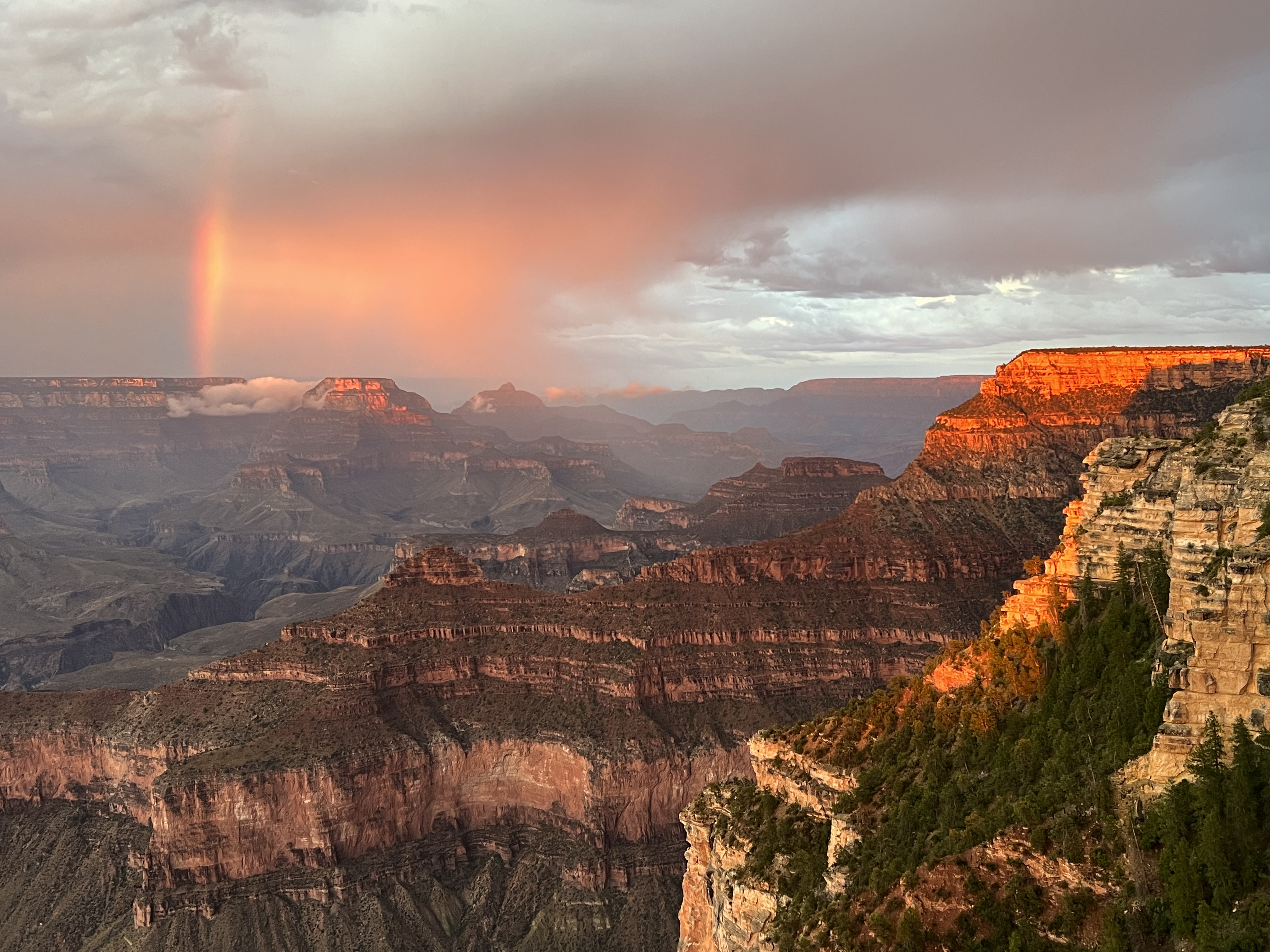
Low-angle sunset light breaking through storm clouds paints the canyon walls in warm oranges while a rainbow forms in the retreating rain — the kind of fleeting, layered light described in "Understanding Light" above, only visible for a few minutes at most.
A Monsoon Cell Over the Rim
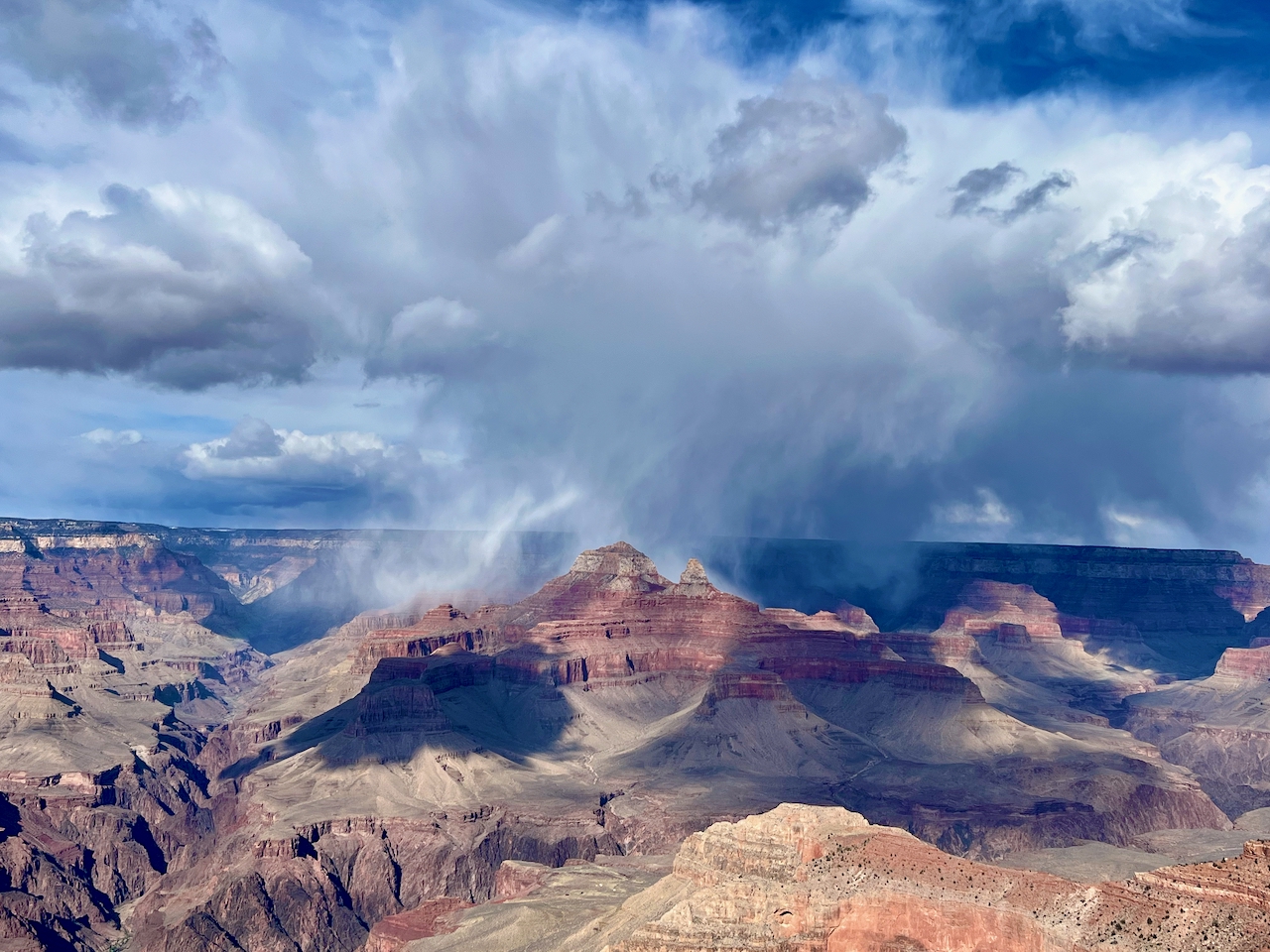
A single storm cell drops visible rain over one section of the canyon while sunlight still reaches another, splitting the scene into dramatically different light and color within the same frame — proof that weather is a compositional tool, not an obstacle.
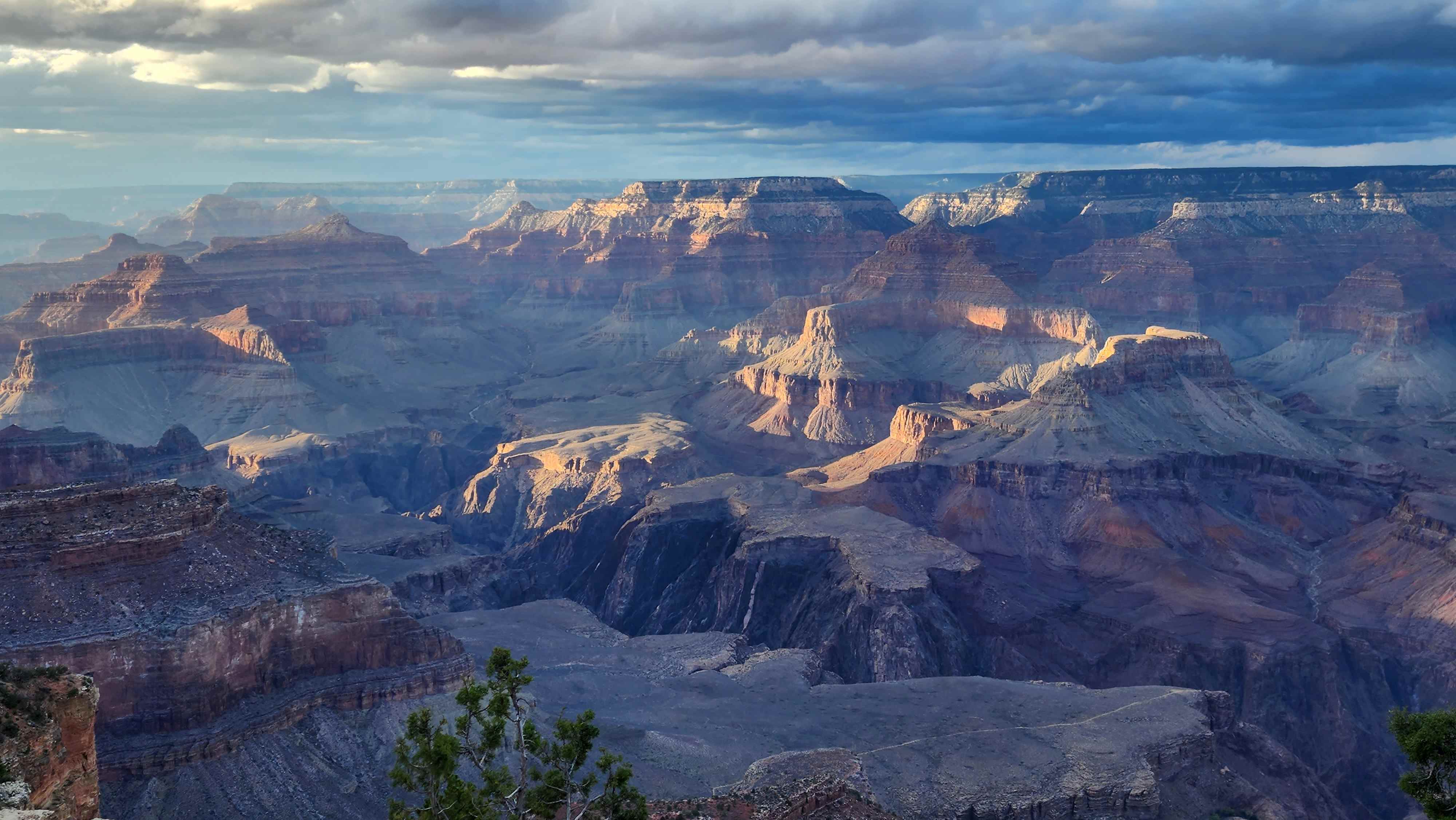
Winter's Quieter Palette
Cooler air and lower winter sun angles produce longer shadows and a more muted, contrast-heavy palette than the same view would show in summer, with patches of light picking out individual formations rather than flooding the whole scene.
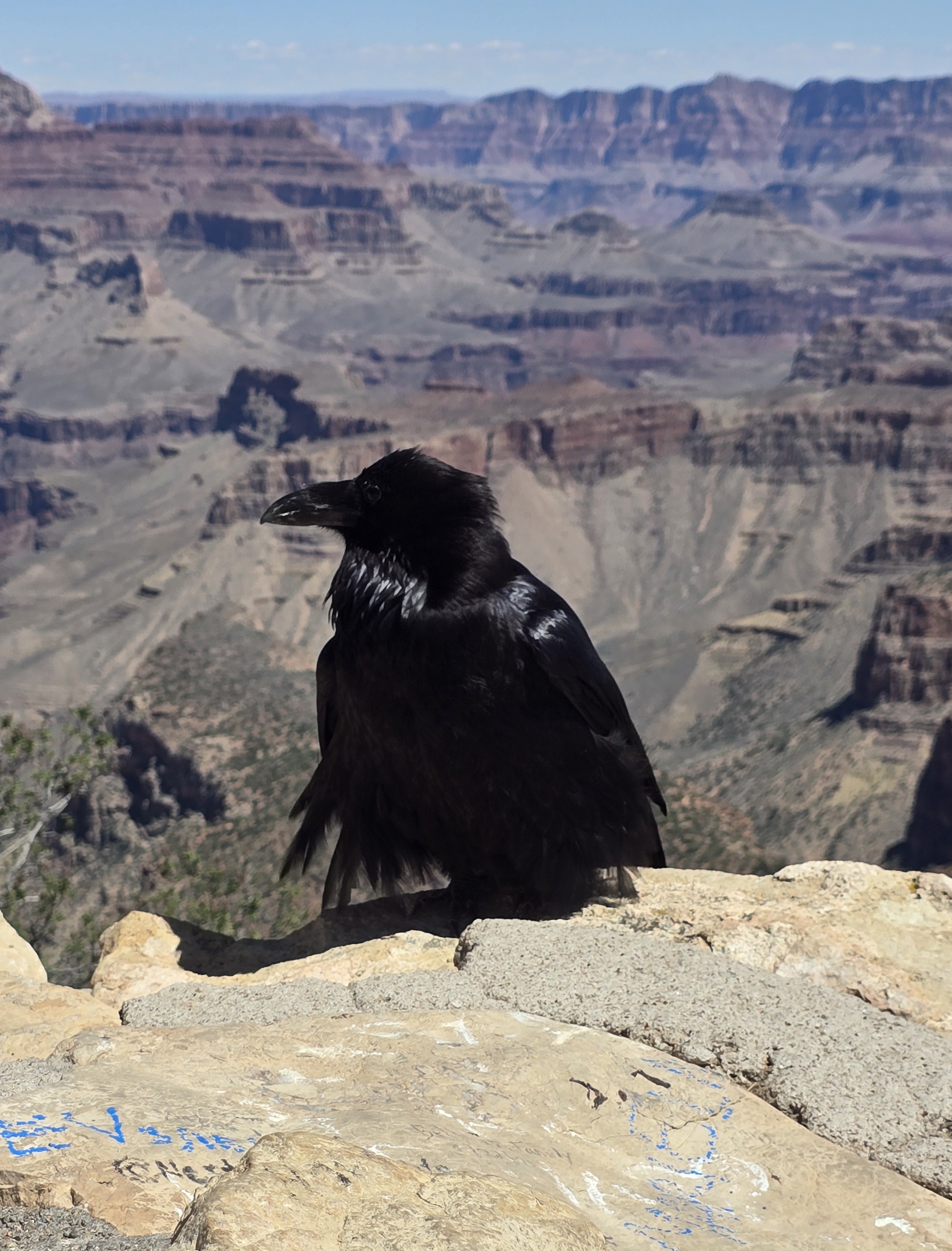
A Foreground Subject, Not a Wide View
Instead of another wide shot of the canyon, this frame puts a raven in sharp foreground focus with the canyon reduced to a soft backdrop — the same location, told as an entirely different kind of story through composition alone.
Frequently Asked Questions
Can I use a drone?
No — drones are prohibited within Grand Canyon National Park, so it's best left at home or in the car rather than packed for the day. This applies throughout the park, not just at developed overlooks.
Should I bring a tripod?
If you're photographing sunrise, sunset, or blue hour, yes — a tripod makes a meaningful difference in image sharpness during longer exposures and lower light.
Do smartphones take good photos?
Yes, particularly in good light. Modern smartphones are genuinely capable of excellent Grand Canyon images, and having a camera with you is always better than not.
What lens is best?
A wide-angle lens is the most versatile choice for most viewpoints, though a standard zoom and a telephoto both add real value for different kinds of compositions and for wildlife.
What season is best?
There's no single best season — fall offers the most consistently reliable conditions, but spring, summer, and winter each offer their own distinct photographic opportunities.
Should I photograph sunrise or sunset?
Both offer excellent light in different ways — sunrise tends to be quieter with cooler tones, while sunset offers warmer color and often more dramatic clouds. Many photographers find value in both.
How much camera gear should I carry?
Only as much as you can comfortably carry for a full day — an overloaded bag often means gear stays unused. Our equipment table above offers a reasonable starting point by experience level.
How do I protect my camera from dust?
A basic rain cover or dry bag helps in windy, dusty conditions, and a lens cloth for regular cleaning prevents dust and fingerprints from showing up in your final images.
Continue Planning Your Grand Canyon Visit
Great photography starts with a well-planned visit. These related guides cover timing, weather, gear, and more, so nothing needs to be left to chance.
Experience the Grand Canyon Through the Lens of a Local Guide
The Grand Canyon offers endless photographic opportunities, but changing light, weather, and seasonal conditions make every visit unique. Our experienced guides help guests make the most of their time by sharing local knowledge about lighting, weather, wildlife, and the canyon's natural history — allowing photographers of every skill level to enjoy an unforgettable experience.