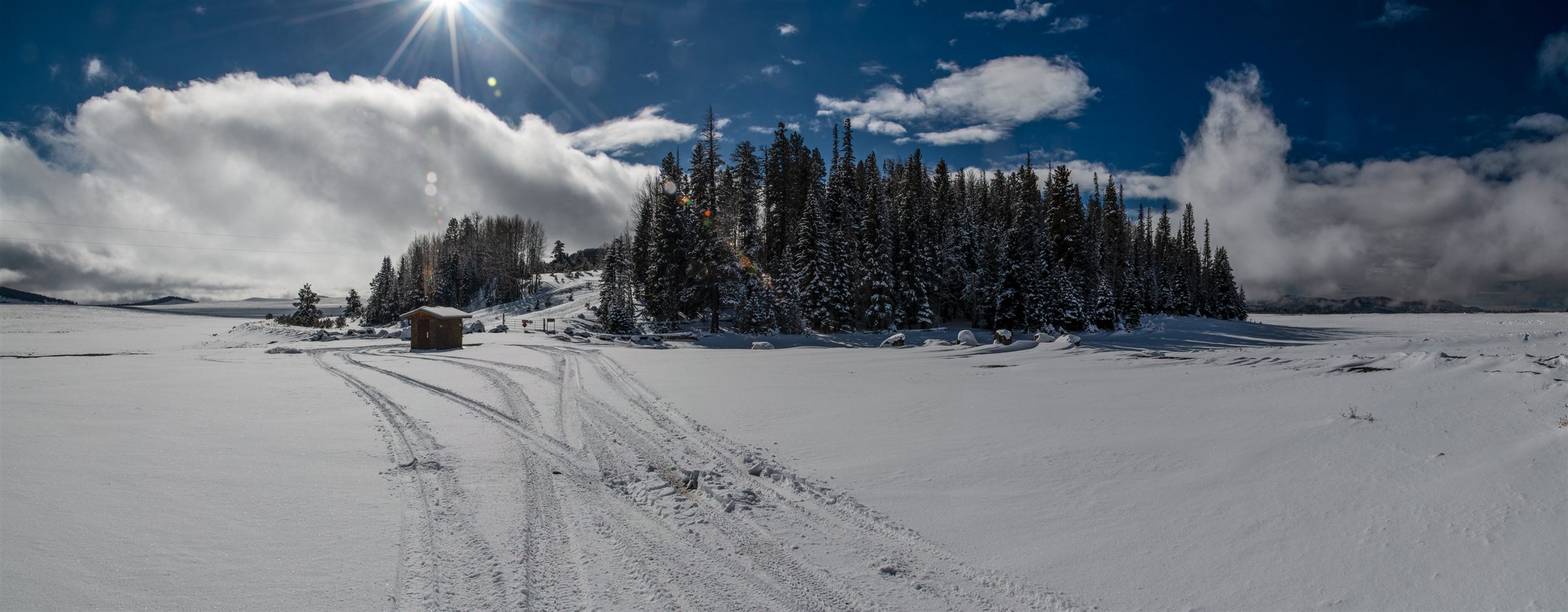
Apache Heritage at a Glance
Across the mountains, forests, deserts, and river valleys of Arizona and the wider Southwest, several distinct Apache tribes maintain sovereign homelands and living cultural traditions today. Before learning more about Apache heritage and its many communities, here's an overview at a glance:
Multiple Apache Tribes
Each with its own identity and government
Arizona and the Southwest
Homelands spanning several states
Rich Cultural Traditions
Language, art, and ceremony
Remarkably Diverse Landscapes
Mountains, forests, and deserts
Living Indigenous Cultures
Thriving in the present, not just history
Sovereign Tribal Governments
Self-determination on tribal lands
An Enduring Heritage
Resilience across generations
Who Are the Apache Peoples?
The Apache Name
"Apache" is an umbrella term, not the name of a single unified nation. It refers to several related but distinct Indigenous peoples who share broad linguistic and cultural roots while maintaining their own separate identities, histories, dialects, and traditions. Grouping these communities under one label is useful for general reference, but it can also obscure real and important differences — in the same way that referring broadly to "European peoples" would flatten meaningful distinctions between entirely separate nations and languages. Each Apache tribe today governs itself independently, with its own tribal council, its own homeland, and its own particular version of a shared broader heritage.
Historically, Apache peoples are generally grouped by anthropologists and linguists into several broader divisions — including Western Apache, Chiricahua, Mescalero, Jicarilla, and Lipan, among others — each occupying its own historical territory across Arizona, New Mexico, and beyond. The tribes discussed in detail below fall primarily within the Western Apache grouping, with the Fort Sill Apache Tribe descending from Chiricahua bands. Even this broader classification is a simplification of a far more detailed and locally specific traditional understanding of band and community identity that predates any outside attempt to categorize it.
Distinct Apache Tribes
Several federally recognized Apache tribes maintain reservations and communities in Arizona and the surrounding region today, each with a distinct homeland and identity:
White Mountain Apache Tribe: Based in the White Mountains of east-central Arizona, centered on the community of Whiteriver, with a homeland defined by high forests, cold-water streams, and some of the state's most significant elevation change.
San Carlos Apache Tribe: Located south of the White Mountains along the Gila River region, governing a large reservation spanning desert lowlands and mountain terrain alike.
Tonto Apache Tribe: A smaller tribe based near Payson in central Arizona, with deep historical ties to the Tonto Basin and the rugged country surrounding the Mogollon Rim.
Yavapai-Apache Nation: Based in the Verde Valley, a nation formed by two historically distinct peoples — the Yavapai and the Apache — who share the same reservation and a related, intertwined history.
Fort Sill Apache Tribe: Though headquartered today in Oklahoma, the Fort Sill Apache Tribe carries a direct historical connection to Arizona, descending from Chiricahua and Warm Springs Apache bands forcibly relocated from the Southwest in the late 1800s — a history discussed further below.
Each of these five tribes maintains its own distinct government, economy, and cultural institutions, even where historical and linguistic ties connect them. Visiting or learning about one Apache community does not mean having learned about "the Apache" broadly; each tribe's own particular history, homeland, and traditions deserve to be understood on their own terms.
A Living Heritage
Across all of these tribes, Apache culture continues today through family, community, language, and tradition, alongside fully modern tribal governments, schools, and economic enterprises. Education and cultural preservation programs work side by side, reflecting communities that hold their traditions and their contemporary lives as complementary rather than contradictory. Family and clan relationships remain central to daily life, and tribal members continue to pass down language, cultural knowledge, and connection to homeland across generations, even as each community navigates the demands of modern governance, healthcare, and economic development.
Modern Apache tribal governments today oversee a considerable range of responsibilities — from natural resource management and forestry to healthcare, education, and economic development — while continuing to support language programs, cultural centers, and events that keep younger generations connected to their specific tribal heritage. That combination, contemporary governance built on top of enduring tradition, is a defining feature of Apache life today across every one of these distinct communities.
A Brief History of the Apache Peoples
Early History
Apache oral tradition and linguistic evidence both point to a history of migration, with Apache peoples' Athabaskan-language ancestors moving into the Southwest over the course of many centuries before eventually establishing the traditional territories associated with the various Apache groups by the time of European contact. That migration history is a foundational part of Apache identity, reflected in the deep, practical knowledge each community developed of its own particular stretch of country — knowledge built and refined over many generations of sustained presence in a specific homeland. By the time Spanish explorers reached the Southwest, distinct Apache groups had already established the broad territorial patterns that would define their history for centuries afterward.
This migration history connects Apache peoples linguistically to other Athabaskan-speaking peoples across North America, including groups as far away as northwestern Canada and Alaska, a relationship reflected in shared linguistic roots even after many centuries of separate development in entirely different environments. Once established in the Southwest, individual Apache bands developed the distinct territorial identities — tied to specific mountains, rivers, and stretches of desert — that would eventually define the separate tribes recognized today.
Life Before European Contact
Apache communities developed livelihoods closely adapted to their specific homelands, combining hunting, gathering, trade, and, in some areas, agriculture into a way of life suited to often demanding terrain. Hunting provided a significant part of the diet in many Apache communities, supplemented by the gathering of wild plants, seeds, and fruits known and harvested according to detailed seasonal knowledge of the land. Where terrain and water allowed, some Apache groups also practiced agriculture, growing corn, beans, and squash along river bottoms and other suitable ground. Trade connected Apache communities to neighboring peoples across the Southwest, exchanging goods, materials, and knowledge along routes that predated any European presence in the region. Family and band structure organized daily life, with extended kin networks providing the basic social and economic unit around which broader community life was built.
Leadership within traditional Apache bands was generally earned through demonstrated skill, judgment, and the trust of the community, rather than inherited automatically, and a band's composition could shift over time as families moved between groups according to need, marriage, and opportunity. That flexibility, built into the basic social structure of Apache life, proved to be a significant source of resilience in the centuries of upheaval that followed.
Conflict and Change
The 19th century brought a prolonged period of conflict and profound change to Apache communities, as Spanish, later Mexican, and eventually United States forces each sought to assert control over traditional Apache territory. Decades of warfare, marked by both sustained Apache resistance and considerable hardship, reshaped the region through the mid-to-late 1800s. This history includes forced removals, the loss of much traditional territory, and, for the Chiricahua and Warm Springs Apache in particular, exile far from their homeland following the surrender of Apache leaders in the 1880s — a period of imprisonment and relocation that lasted for years before some band members were eventually able to settle in Oklahoma and New Mexico. This is a difficult period in Apache history, best understood plainly and without sensationalism: a sustained, multi-generational conflict rooted in competing claims to land and sovereignty, met with remarkable Apache resilience that carried communities through to the present day.
Reservations for the tribes that remained in Arizona — including the White Mountain and San Carlos Apache — were established during this same turbulent period, generally encompassing only a portion of each community's far larger traditional territory. The decades that followed brought gradual community rebuilding, as Apache tribes worked to establish stable governance and economic footing on considerably reduced land bases, a process that continued well into the 20th century.
Apache Communities Today
Today, Apache tribes govern their own reservations through elected tribal councils, managing economic development, education, healthcare, and natural resources with a significant degree of self-determination. Language revitalization programs work to keep Apache languages alive for younger generations, alongside cultural preservation efforts documenting and protecting traditional knowledge. Arts and tourism enterprises, forestry, and conservation programs all contribute to modern Apache economies, built on reservations that, while smaller than the full extent of historical Apache territory, remain vibrant, self-governing homelands.
Each tribe has charted its own particular path forward, shaped by its specific homeland and resources — forestry and outdoor recreation for the White Mountain Apache, a mix of desert and mountain enterprise for the San Carlos Apache, and tourism and cultural programming for the smaller Tonto Apache and Yavapai-Apache communities. What unites them is a shared commitment to building modern, self-sufficient tribal nations without abandoning the traditions that carried their communities through the difficulties of the preceding century.
Homelands of the Apache
One of the most defining features of Apache heritage is the sheer range of landscapes different Apache communities have called home. The White Mountains rise to nearly 11,500 feet at Mount Baldy, supporting dense ponderosa pine and mixed-conifer forest, cold-water streams, and high mountain meadows. To the south and west, the Salt River and Gila River corridors cut through considerably more arid country, where desert vegetation and rugged canyon terrain define daily life in an entirely different way than the forested highlands to the north. The Mogollon Rim, a dramatic escarpment stretching roughly two hundred miles across central Arizona, marks the transition between these worlds, its 7,600-foot elevation offering sweeping views across the lower desert country to the south.
Different Apache communities adapted to these different environments in different ways. The White Mountain Apache built a way of life suited to forest and high meadow, centered on hunting, trout streams, and the practical demands of a cold, high-elevation climate. The San Carlos Apache, whose reservation spans both desert lowland and mountain terrain, developed knowledge suited to a considerably wider range of elevation and vegetation within a single homeland. The Tonto Apache and Yavapai-Apache, centered respectively on the Tonto Basin and the Verde Valley, adapted to the canyon country and river valleys of central Arizona, where mountains, forests, and desert basin all meet within a comparatively compact geography.
This range of adaptation — mountain to canyon to desert, sometimes within the boundaries of a single reservation — reflects a defining truth about Apache heritage: it was never a single, uniform way of life, but a family of related traditions, each shaped by the specific demands and gifts of a particular homeland.
Canyons cut through much of this territory as well, offering shelter, water, and defensible ground that played a significant role in Apache history, particularly during the conflicts of the 19th century. The rugged canyon country of central Arizona, in particular, became closely associated with Apache resistance during that period, its difficult terrain offering advantages that more open ground could not. That same terrain today defines much of the Tonto Apache and Yavapai-Apache homelands, a landscape as practically significant now as it was historically.
Water, in every one of these environments, shaped where communities could settle permanently and where they could only pass through. The relatively reliable streams of the White Mountains supported more sustained settlement patterns, while the drier country to the south and west demanded more mobility and more detailed knowledge of scattered, seasonal water sources. That underlying relationship between water and settlement pattern, though rarely discussed explicitly, is one of the most important keys to understanding why different Apache communities developed the particular traditions and territorial patterns they did.
Apache Culture and Traditions
Across the various Apache tribes, certain values and practices recur consistently, even as specific customs vary from community to community.
Family: Extended family and clan relationships form the foundation of Apache social life, shaping identity, obligation, and daily responsibility in ways that extend well beyond the immediate household. Matrilineal descent shapes clan membership in several Apache communities, tying identity closely to maternal lineage.
Community: Apache communities maintain a strong tradition of mutual obligation and shared responsibility, reflected in tribal governance, community events, and the cooperative work of managing tribal lands and resources.
Traditional Knowledge: Generations of close observation of mountain, forest, and desert have produced deep, practical bodies of ecological knowledge specific to each Apache homeland — knowledge of water sources, plant uses, seasonal patterns, and wildlife behavior that continues to inform land management today.
Respect for Nature: Land and water are treated as an ongoing responsibility rather than a resource to be used without limit, consistent with traditions built on direct, sustained dependence on a specific homeland across many generations.
Storytelling: Oral tradition remains an important way that Apache history, values, and knowledge of the land are carried between generations, preserving accounts of migration, homeland, and identity.
Ceremonies: Ceremonial life plays a significant and continuing role in many Apache communities, including well-known coming-of-age ceremonies marking significant life transitions. As with many Indigenous traditions, the specific content of Apache ceremonies is generally considered appropriate only for community members and participants to describe in detail, and this guide accordingly focuses on their general cultural importance rather than specific ceremonial content, out of respect for that boundary.
Taken together, these values describe a culture organized around continuity — of family, of land, and of knowledge passed carefully from one generation to the next. That continuity has proven remarkably durable, carrying core Apache values through a century marked by profound external pressure and change, and it continues to shape daily life in Apache communities across Arizona today.
Apache Arts and Craftsmanship
Apache artistic traditions are highly regarded, technically demanding, and deeply tied to the specific materials and knowledge of each community's homeland.
Basketry: Apache basketry is internationally recognized for its craftsmanship, particularly the finely coiled baskets produced using techniques passed down across many generations of skilled weavers. Materials are typically gathered directly from the surrounding landscape, tying the finished work closely to the specific place it comes from.
Beadwork: Intricate beadwork, used in both everyday and ceremonial contexts, remains an actively practiced Apache art form, reflecting both traditional design and individual artistic expression.
Textiles: Woven and beaded garments and accessories reflect techniques and patterns maintained carefully across generations, often produced for significant community and family occasions.
Woodworking: Traditional woodworking, including the crafting of tools, cradleboards, and other practical items, developed alongside the specific timber resources available in forested Apache homelands like the White Mountains.
Contemporary Artists: Apache artists today continue and extend these traditions, producing work recognized well beyond tribal lands in galleries and collections across the country. Supporting these artists directly — buying authentic Apache work from the artists themselves or from tribally authorized outlets — helps ensure the economic benefit of this artistry stays within the community that created it, and that these traditions remain viable for the next generation of Apache artisans.
As with Apache basketry specifically, much of this artistry depends on specialized, often painstaking knowledge — knowing which plants yield the right material at the right time of year, or how to prepare and work that material into a finished piece capable of holding water or lasting for generations. That technical depth is easy to overlook in a finished piece, but it represents years, and often a lifetime, of accumulated skill passed down through direct teaching within families and communities.
The Apache and Arizona's Mountains
If any single landscape distinguishes Apache heritage from the other Indigenous cultures of Arizona, it is the mountains. Where Navajo and Hopi tradition centers on the high desert and mesa country of the Colorado Plateau, Apache history is inseparable from the White Mountains, the Mogollon Rim, and the forested high country of east-central Arizona.
Mountains provided far more than scenery to Apache communities — they provided the practical foundation for an entire way of life. Dense forests supported abundant game, making the White Mountains and surrounding high country a crucial hunting ground for elk, deer, and other wildlife central to the traditional Apache diet. Cold-water streams and high-elevation lakes offered a reliability of water scarce elsewhere in Arizona, supporting both daily life and the seasonal movement between elevations that shaped the Apache year. As seasons changed, Apache bands historically moved between elevations, following game, water, and ripening plant resources in a pattern refined across many generations of accumulated knowledge of this specific mountain country.
Mountains also carried, and continue to carry, deep spiritual importance in Apache tradition, understood as sacred places bound up with origin, identity, and ongoing responsibility rather than simply useful terrain. That significance helps explain why the White Mountain Apache Tribe, in particular, has built its modern identity so closely around careful stewardship of its forested homeland, treating conservation not as a modern policy borrowed from outside but as a continuation of a far older relationship with this land.
Adapting to mountain country also demanded real resourcefulness — building shelter suited to cold winters and heavy snow, developing detailed knowledge of which slopes and elevations offered water, game, or shelter at different times of year, and moving safely and efficiently across terrain that offers little margin for error. That adaptation, sustained across many centuries, is a defining and often underappreciated part of what makes Apache heritage distinct among the Indigenous cultures of Arizona.
This mountain identity also shaped how Apache bands related to the difficult history of the 19th century. The same forested, canyon-cut terrain that supported traditional hunting and seasonal movement later offered cover and advantage during decades of sustained conflict, terrain that outside forces often struggled to navigate as effectively as those who had spent generations learning its every ridge, spring, and hidden approach. That intimate, hard-won knowledge of the mountains was not incidental to Apache resilience during this period — it was one of its central foundations.
Even today, that mountain identity remains visible in how Apache communities, particularly the White Mountain Apache Tribe, define themselves. Forestry, wildlife management, and outdoor recreation are not simply modern economic activities layered onto tribal land; they are a direct continuation of a relationship with mountain country that stretches back long before any reservation boundary was drawn, adapted to new tools and new economic realities while carrying forward the same underlying values of knowledge, respect, and careful stewardship.
Mountains, Forests, and Freedom
Arizona's mountain ranges, forests, and canyons did more than provide resources for Apache communities — they shaped an entire way of life built around movement, adaptability, and close attention to a changing landscape.
Seasonal Movement: Apache bands historically moved across a range of elevations throughout the year, following the availability of game, water, and wild plant foods as seasons changed. That movement was neither random nor constant; it followed patterns refined across generations, timed to the specific rhythms of a particular stretch of mountain and forest country.
Hunting and Gathering: Elk, deer, and smaller game supported by the region's forests provided a significant part of the traditional Apache diet, supplemented by a wide range of gathered plants, seeds, and fruits harvested according to detailed seasonal knowledge.
Knowledge of Local Plants: Generations of close observation produced a deep, practical understanding of which plants offered food, medicine, or material for tools and shelter at different elevations and times of year — knowledge specific enough to vary meaningfully between neighboring Apache communities occupying even slightly different terrain.
Water Sources: Knowledge of reliable springs, streams, and seasonal water sources across a wide range of terrain was essential to safe, sustained movement through mountain and forest country, and remains a core piece of traditional ecological knowledge passed down within Apache communities today.
Adapting to Changing Environments: Perhaps more than any single skill, the ability to adapt — to elevation, weather, season, and terrain — defined Apache life in Arizona's mountain country. That adaptability, developed over centuries of sustained presence across a genuinely challenging landscape, remains a defining thread connecting traditional Apache life to the resilience of Apache communities today.
Wildlife and Nature
The high-elevation forests central to Apache homelands support some of Arizona's richest wildlife. Ponderosa pine dominates much of the White Mountains and Mogollon Rim country, giving way at higher elevations to stands of aspen and mixed conifer, and to oak woodland at lower, drier elevations. That range of forest type supports elk, black bears, mule deer, and wild turkeys, all traditionally significant to Apache hunting and continuing to define the character of this high country today.
Cold-water streams and high mountain lakes, comparatively rare elsewhere in Arizona, support their own distinct ecosystems within Apache homelands, from trout fisheries to the riparian vegetation that thrives along reliable water. This ecological richness, unusual for a state so strongly associated with desert terrain, is very much part of what makes the Apache homelands of eastern Arizona distinct from the rest of the state.
The White Mountain Apache Tribe, in particular, has built an active conservation and wildlife management program around this rich natural inheritance, managing hunting, fishing, and forest health across tribal land with an approach that draws on both modern wildlife science and generations of traditional ecological knowledge. That stewardship reflects a broader pattern across Apache communities: land and wildlife are managed not simply as resources to be used, but as an inheritance to be maintained for generations still to come.
For a closer look at the animals found throughout the wider region, see our full Arizona Wildlife → guide.
Arizona's Apache Tribes
It's easy for outsiders to think of "the Apache" as a single community, but Apache heritage today is carried forward by several distinct tribes, each with its own homeland and identity.
| Tribe | Traditional Homeland | Distinctive Characteristic |
|---|
| White Mountain Apache | White Mountains | Forest landscapes, hunting traditions, and outdoor stewardship. |
| San Carlos Apache | Gila River region | Strong cultural traditions and diverse desert-mountain homeland. |
| Tonto Apache | Central Arizona | Deep connection to the Verde Valley and surrounding mountains. |
| Yavapai-Apache Nation | Verde Valley | Shared Yavapai and Apache heritage with a unique cultural identity. |
| Fort Sill Apache | Historical ties to Arizona and New Mexico | Preservation of Apache heritage after forced relocation. |
Understanding Apache heritage means understanding this diversity — five distinct tribal nations, each with its own government, homeland, and particular expression of a shared broader history.
Interesting Facts About Apache Heritage
- Arizona is home to several federally recognized Apache tribes, each with its own sovereign government.
- Apache communities have long adapted to a wide range of environments, from high mountains to desert landscapes.
- Apache basketry is internationally recognized for its craftsmanship.
- Many Apache communities continue to preserve and teach their languages and traditions today.
- The White Mountains remain deeply culturally significant to the White Mountain Apache Tribe.
The Spirit of Resilience
It would be a mistake to let Apache history be defined solely by the conflict of the 19th century. That period is real, and it deserves to be told honestly — but it is only one chapter in a much longer, more complete story. Apache history is, just as much, a story of resilience, adaptation, cultural continuity, and renewal, carried forward by communities that were never simply subjects of history, but active participants in shaping their own continued existence.
Today, Apache communities across Arizona continue to preserve their languages, traditions, and cultural identity, while simultaneously building vibrant, modern tribal nations — with their own schools, health systems, conservation programs, and economic enterprises. That dual commitment, to tradition and to a fully contemporary future, is not a contradiction. It is the same resourcefulness and adaptability that allowed Apache communities to thrive across some of Arizona's most demanding terrain for centuries, now applied to an entirely different set of challenges.
Understanding Apache heritage means understanding both halves of that story: the hardship endured, and the remarkable, ongoing resilience that carried Apache communities through it. Both are part of the same continuous history, still being written by Apache people today.
That resilience shows up in ordinary, unremarkable ways as much as in any single dramatic achievement — in a language class held after school, in a forestry program managing land that sustained ancestors for centuries, in a basket woven using techniques passed down through a family line that conflict and displacement never managed to fully break. None of it happened automatically or without effort. It happened because Apache communities chose, generation after generation, to keep going, to keep teaching, and to keep believing that their traditions were worth carrying forward into a future their ancestors could not have fully imagined.
Frequently Asked Questions
Who are the Apache peoples?
The Apache are several related but distinct Indigenous peoples of the Southwest, each maintaining its own sovereign tribal government, homeland, and traditions today, united by broad linguistic and cultural roots.
How many Apache tribes are there in Arizona?
Arizona is home to several federally recognized Apache communities, including the White Mountain Apache Tribe, the San Carlos Apache Tribe, the Tonto Apache Tribe, and the Yavapai-Apache Nation, each with its own reservation and government.
What languages do Apache communities speak?
Apache languages belong to the Athabaskan language family, with each Apache tribe maintaining its own related but distinct language variety, alongside active language revitalization programs in many communities.
Where do Apache tribes live today?
Apache tribes govern reservations across Arizona and the surrounding region, including the White Mountains, the Gila River region, central Arizona near Payson, and the Verde Valley, with the Fort Sill Apache Tribe headquartered today in Oklahoma.
What is Apache basketry known for?
Apache basketry is internationally recognized for its fine coiled construction and craftsmanship, produced using techniques and locally gathered materials passed down across many generations of skilled weavers.
How have Apache traditions been preserved?
Through oral tradition, language revitalization programs, active ceremonial life, tribally supported arts and cultural preservation programs, and the continued teaching of traditional knowledge within Apache families and communities.
How can visitors respectfully learn about Apache heritage?
By supporting Apache artists and tribal enterprises directly, learning the history of individual Apache tribes rather than treating "Apache" as a single undifferentiated culture, and approaching any visit to Apache lands with an understanding that these are living, sovereign homelands.
Continue Exploring Arizona
Apache heritage connects to the wider story of Arizona's Indigenous peoples and the landscapes they call home. Here's where to go next:
Navajo Nation
The largest Native American reservation in the United States.
READ GUIDE →Hopi Tribe
One of North America's oldest continuously living cultures.
READ GUIDE →Havasupai Tribe
Life shaped by water within the Grand Canyon.
READ GUIDE →Hualapai Tribe
The western Grand Canyon and the Colorado River.
READ GUIDE →Arizona Native American Arts & Culture
Pottery, weaving, jewelry, and artwork across the Southwest.
READ GUIDE →
Understanding Arizona's Living Indigenous Heritage
Arizona's mountains, forests, deserts, and canyons have been home to Indigenous peoples for countless generations. Learning about Apache heritage offers a deeper appreciation of the traditions, resilience, and enduring connection between people and place. At Grand Canyon Journeys, we believe that meaningful travel begins with respect, curiosity, and an understanding of the cultures that continue to shape the Southwest.